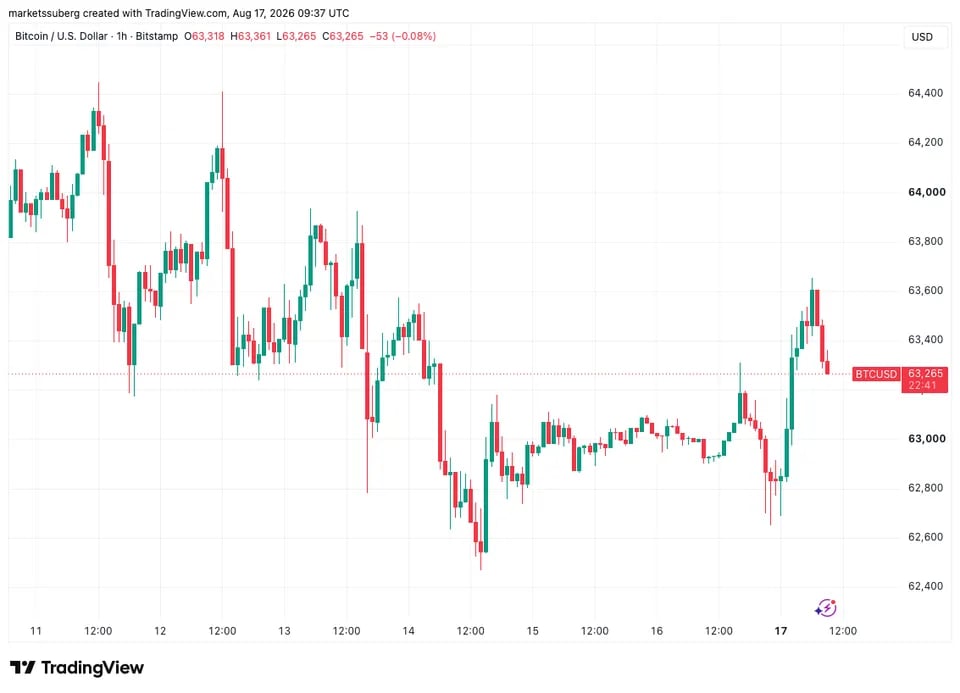
BTC remains inside a broader range of roughly $57,700 to $67,300, with traders watching the $63,220 area for confirmation of further weakness.
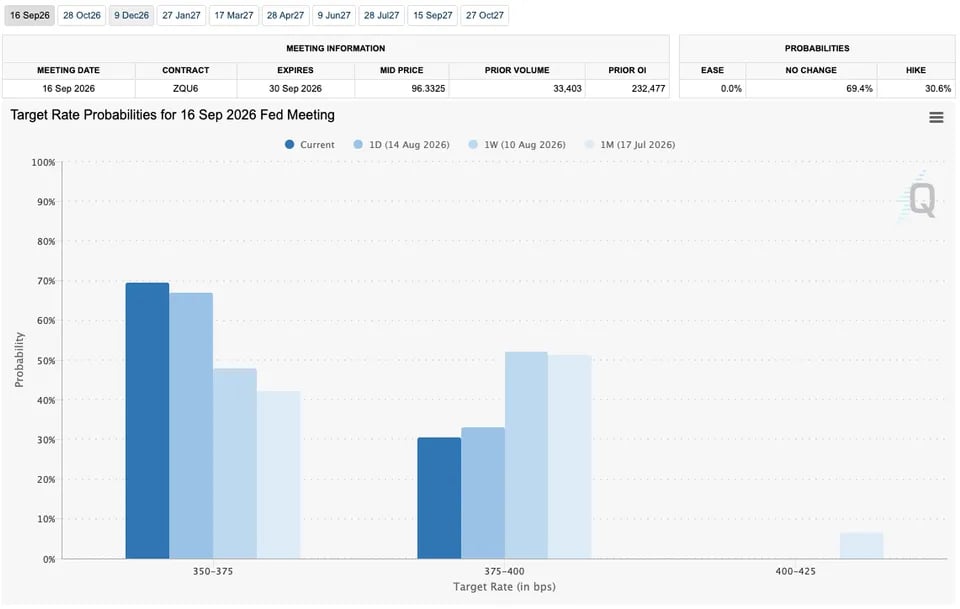
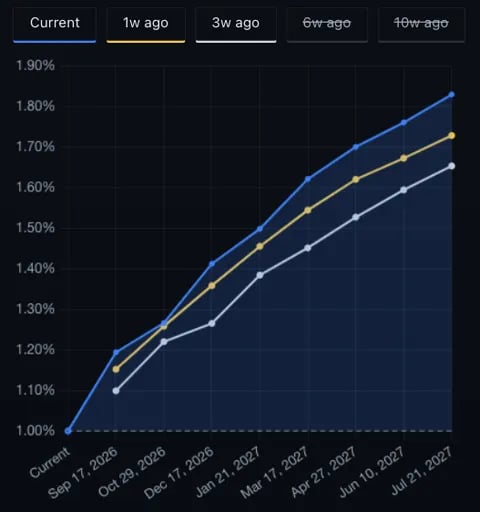
Markets are pricing in roughly 70% odds that the Federal Reserve keeps interest rates unchanged in September.
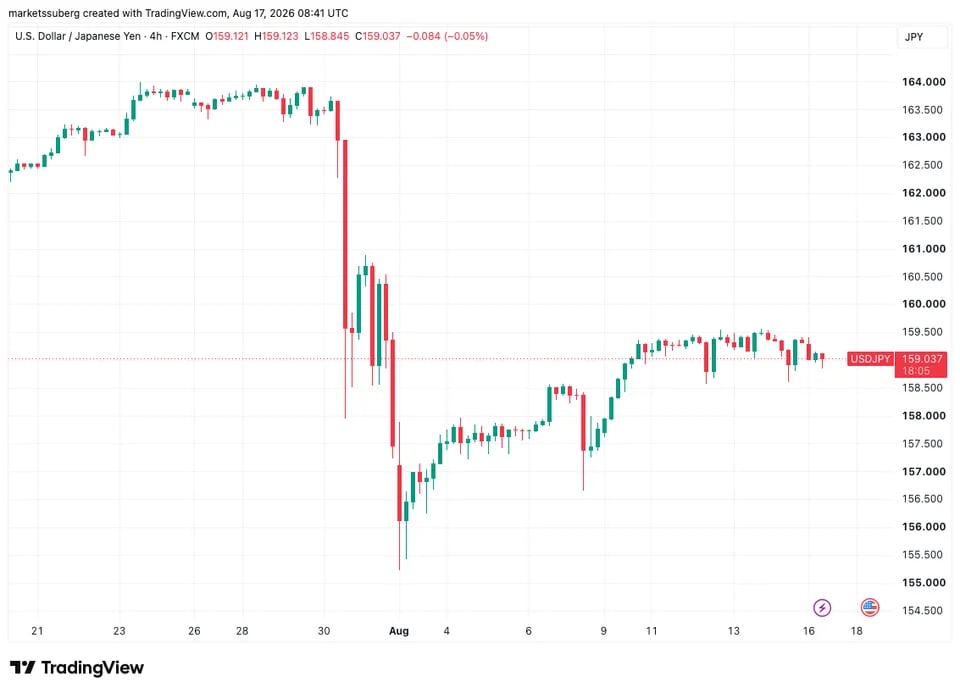
Japan's weaker-than-expected Q2 GDP and rising government bond yields have raised concerns about tighter global liquidity.
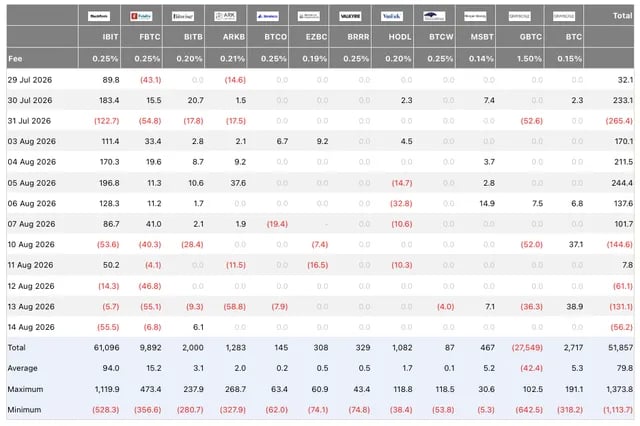
U.S. spot Bitcoin ETFs recorded $267.2 million in net outflows last week, while whale deposits to exchanges have increased.
Bitcoin slips below the 200-week moving average
Bitcoin recovered modestly after Sunday's weekly close, reaching an intraday high near $63,655 on Bitstamp. However, the rebound has not yet been strong enough to reclaim the 200-week SMA.
The long-term moving average stood around $64,216 at the weekly close. Its importance comes from Bitcoin's previous market cycles, particularly 2022, when BTC fell below the level before entering a prolonged period of consolidation and eventually reaching its cycle low.
Analyst Benjamin Cowen highlighted the similarity between the current market and the summer of 2022.
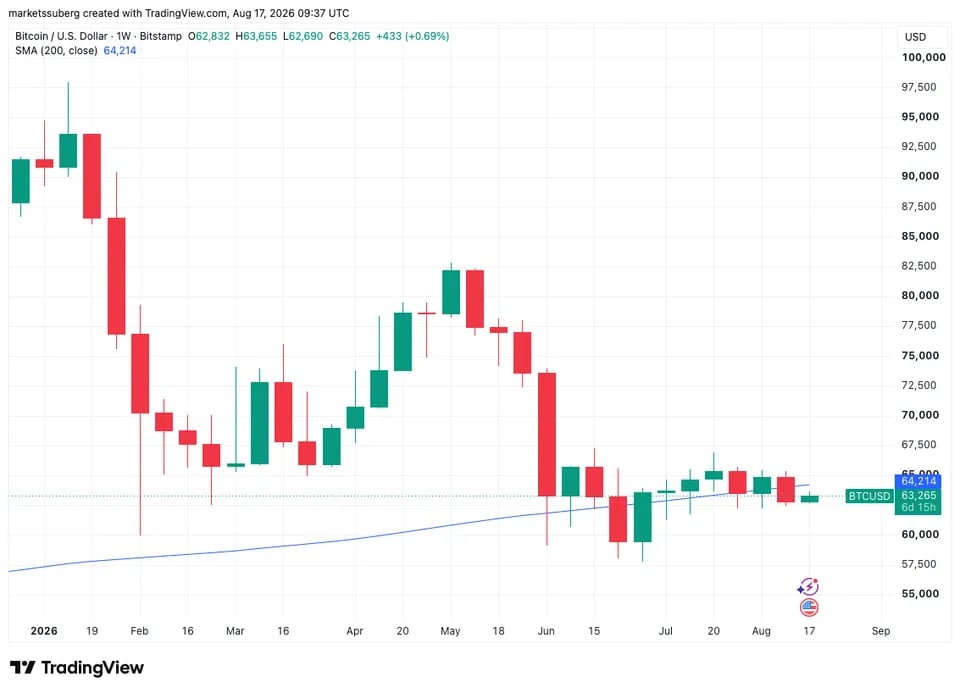
“What is interesting is how in both summer 2022/2026, Bitcoin capitulated below the 200W SMA, then bounced, then gave it up in mid-August.”
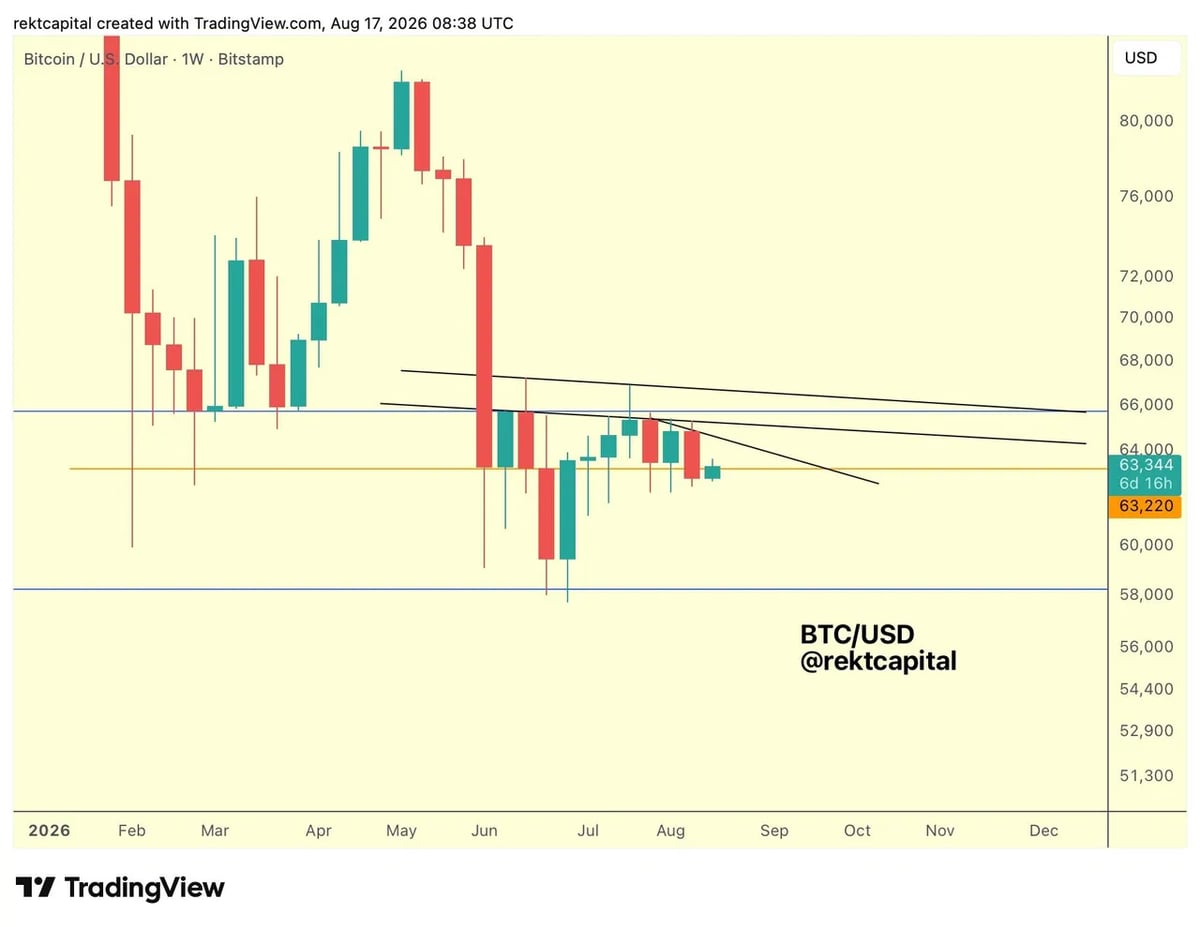
Trader and analyst Rekt Capital is also watching the $63,220 area. A failure to reclaim that level on a weekly basis could increase the probability of another move toward the lower portion of Bitcoin's current trading range.
For now, BTC remains caught between approximately $58,000 and $66,000, leaving the next decisive breakout or breakdown as the key technical signal.
Fed minutes arrive as rate expectations shift
U.S. monetary policy remains another major driver for Bitcoin this week.
Recent inflation and economic data have reduced expectations for additional Federal Reserve tightening. According to the CME FedWatch Tool, traders are assigning roughly 70% odds to the Fed keeping rates unchanged in September.
The shift follows softer readings from consumer and producer inflation alongside weaker employment data.
The Federal Reserve is scheduled to release the minutes from its July meeting on Wednesday. The document could provide additional clues about the level of disagreement among policymakers and the conditions that could influence the next rate decision.
The Fed's previous meeting featured significant disagreement over monetary policy, with three officials supporting a 25-basis-point rate increase.
The central bank continues to target 2% inflation over the longer term. Its official communications remain available through the Federal Reserve.
For Bitcoin, the distinction is important. Expectations for fewer rate hikes can support risk assets by reducing fears of tighter financial conditions, but the market still needs stronger liquidity and demand to translate that macro improvement into sustained BTC upside.
Japan's weak GDP raises global liquidity concerns
Japan is also becoming increasingly important for cryptocurrency and broader risk markets.
Japan's economy grew at an annualized rate below expectations during the second quarter, with quarterly and yearly GDP growth coming in at 0.3% and 1.1%, respectively.
The figures were below economists' forecasts of 0.5% and 2.0%.
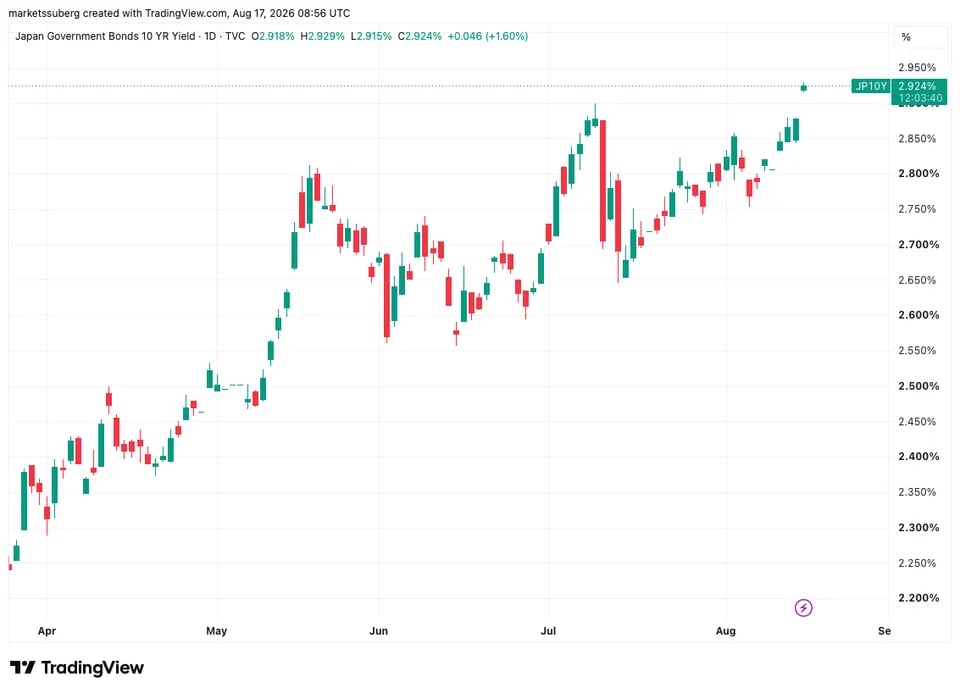
At the same time, markets continue to watch the Bank of Japan as expectations for additional rate increases remain elevated. Japanese government bond yields have also climbed sharply, with the 10-year yield reaching around 2.93%, its highest level since 1996.
A combination of higher Japanese rates, a stronger yen, rising U.S. Treasury yields and additional Bank of Japan tightening could eventually reduce global liquidity.
CryptoQuant analyst Axel Adler Jr. warned that the combination could become important for risk assets.
“If these factors align, Japan’s rate normalization could turn into a global tightening of financial conditions and hit stocks and Bitcoin.”
Japan's economic data and monetary policy therefore represent an important macro risk for BTC traders, particularly while Bitcoin remains below a major long-term technical level.
Bitcoin struggles to attract capital while stocks rise
Another concern is the divergence between Bitcoin and U.S. equities.
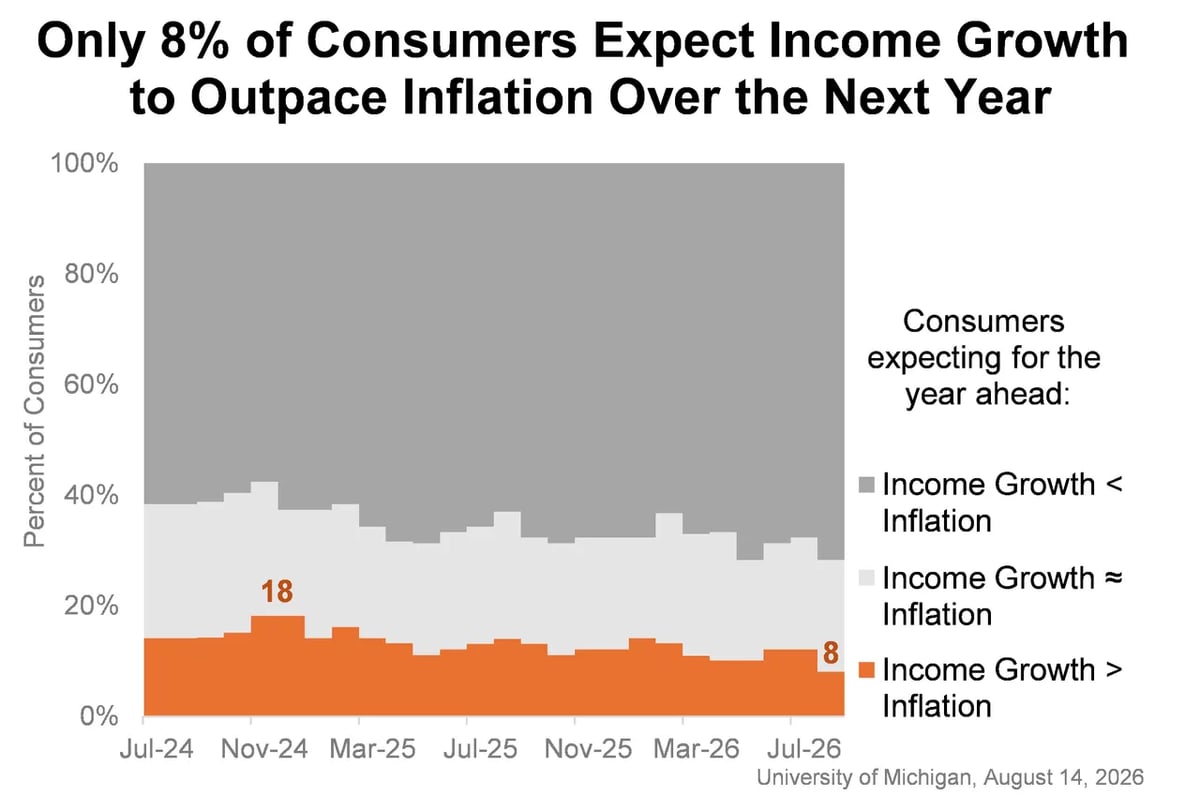
The S&P 500 recently reached record highs, while consumer sentiment remains near historically weak levels. The contrast suggests that investors continue moving capital toward financial assets despite concerns about household finances and economic growth.
Glassnode highlighted the divergence in its latest Week Onchain report.
The analytics firm noted that Bitcoin has not participated in the same way as equities, with institutional demand remaining an important missing component.
One closely watched indicator is the flow of capital into U.S. spot Bitcoin ETFs.
According to Farside Investors, U.S. spot Bitcoin ETFs recorded approximately $267.2 million in net outflows last week. Only one of the five trading sessions produced a net inflow, totaling roughly $7.8 million.
A sustained recovery in ETF inflows could therefore become an important signal that institutional demand is returning.
Until that happens, Bitcoin could continue to lag equities even if broader risk sentiment remains relatively strong.
Whale deposits push Bitcoin exchange reserves higher
Bitcoin's supply dynamics are adding another layer of uncertainty.
CryptoQuant data shows that larger holders have recently accounted for an increasing share of Bitcoin deposits to exchanges. Binance's whale ratio reached approximately 0.71 on Aug. 10, its highest level since March.
Higher exchange deposits do not automatically mean that whales are preparing to sell. Coins can be moved to exchanges for trading, hedging, collateral or other purposes.
However, the increase means more BTC is potentially available for market activity.
Binance's reported Bitcoin reserves reached approximately 674,332 BTC, up 2.57% month-to-date and at their highest level since November 2025, according to CryptoQuant's Bitcoin supply analysis.
The development contrasts with the longer-term trend of Bitcoin leaving centralized exchanges.
Derivatives activity is also dominating trading. On Binance, futures volume was reported at roughly eight times spot volume during early August, highlighting how much of the current market activity is being driven by leveraged positioning rather than direct spot accumulation.
What happens next for Bitcoin?
Bitcoin enters the new week at a critical technical point.
The loss of the 200-week moving average has revived comparisons with 2022, but the current market is not identical to the previous bear cycle. BTC remains within a broad trading range, while expectations for a September Fed rate hike have declined.
The key levels are now relatively clear:
$64,200-$64,300: reclaiming the 200-week moving average would improve the technical picture.
$63,220: a level traders are watching for confirmation of the weekly breakdown.
$58,000-$57,700: the lower end of the current range and an important downside zone.
$66,000-$67,300: the upper range where Bitcoin would need to break through to establish stronger bullish momentum.
Meanwhile, traders will monitor the Federal Reserve minutes, Japan's monetary-policy outlook, ETF flows and exchange balances for signs of whether Bitcoin can attract fresh demand.
Key Takeaway
Bitcoin's weekly close below the 200-week moving average is a significant technical warning, particularly given its similarities to the 2022 market structure. However, the next move will depend on whether BTC can reclaim the $64,000 area or instead breaks toward the lower end of its current range.