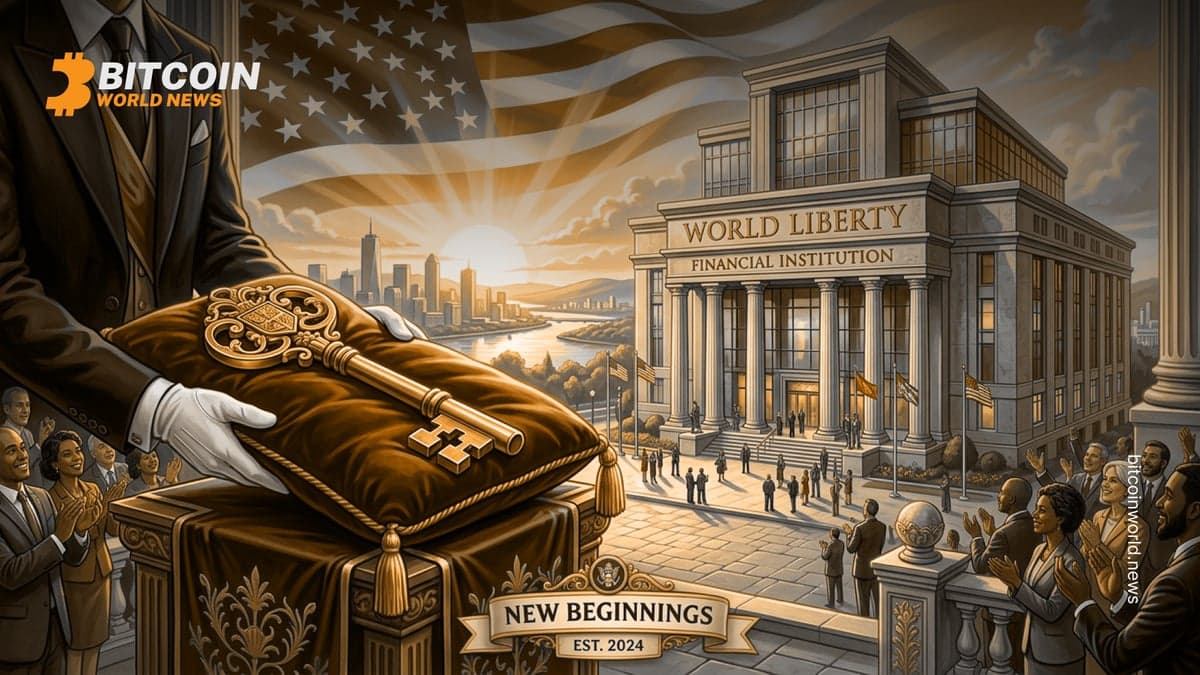
World Liberty Trust Co. received preliminary conditional approval from the OCC to operate as a national trust bank, with plans to issue USD1 and provide digital-asset custody services.
The Trump-backed World Liberty Financial ecosystem has moved closer to entering the U.S. banking system after the Office of the Comptroller of the Currency (OCC) granted preliminary conditional approval for World Liberty Trust Co. to operate as a national trust bank.
The OCC said in an official conditional approval letter that the proposed institution could conduct fiduciary and other trust-company activities. However, the approval is not yet final, with World Liberty required to satisfy additional preopening requirements before beginning operations.
World Liberty plans to issue USD1
According to the OCC, World Liberty Trust Co. plans to take over the role of issuing and safeguarding USD1, the dollar-backed stablecoin associated with World Liberty Financial.
The regulator said the proposed bank plans to issue USD1 to institutional customers nationwide, replacing BitGo Bank & Trust as the stablecoin's current exclusive issuer and custodian.
World Liberty Trust also plans to provide digital-asset custody services primarily for USD1 users and other institutional clients.
The development could give World Liberty a more direct connection between its stablecoin operations and the traditional U.S. financial system.
OCC approval remains conditional
The OCC emphasized that Friday's decision is only a preliminary conditional approval.
The regulator said final approval will depend on World Liberty satisfying additional requirements before opening. The proposed institution also does not intend to become a federally insured depository institution or seek access to a Federal Reserve master account.
World Liberty Trust also said it does not intend to become a bank under the Bank Holding Company Act.
World Liberty's banking plans face political scrutiny
World Liberty first applied for the federal charter in January 2026. The application quickly attracted political attention because President Donald Trump and members of his family are connected to the broader World Liberty Financial business.
Democratic lawmakers have questioned whether the OCC's handling of crypto-bank applications involving politically connected companies could create conflicts of interest.
Senator Elizabeth Warren previously urged the OCC to halt the World Liberty application, arguing that crypto-focused trust banks could potentially avoid safeguards associated with traditional banking institutions. OCC Comptroller Jonathan Gould responded that the agency would evaluate applications according to legal and regulatory requirements rather than political considerations.
The OCC's latest letter said career agency staff reviewed World Liberty's application for compliance with applicable laws and regulations, while also noting that public comments had raised concerns about the company's political connections.
Lawmakers push new banking restrictions
Following the conditional approval, Warren and other Democratic senators announced plans to introduce the Ending Presidential Corruption in Banking Act.
The proposed legislation would seek to prevent senior government officials from owning or controlling banks, adding another layer of political scrutiny around World Liberty's proposed institution.
The issue also intersects with ongoing negotiations over the U.S. Digital Asset Market Clarity Act, as lawmakers continue debating how crypto businesses, stablecoins and financial institutions should operate under federal law.
Why it matters for Bitcoin and crypto
The World Liberty charter decision is significant for the broader crypto market because it shows how stablecoin issuers and digital-asset companies are moving deeper into the regulated U.S. financial system.
If World Liberty Trust ultimately receives final approval, it could become an important piece of the infrastructure surrounding USD1, combining stablecoin issuance with institutional custody under a federally chartered trust structure.
However, the approval remains conditional, and the political debate surrounding World Liberty's ownership and its role in the financial system is likely to continue.
For Bitcoin and the wider crypto sector, the development highlights an increasingly important trend: crypto companies are seeking direct access to regulated banking infrastructure while regulators work to define where digital assets fit within the traditional financial system.