Bitcoin Rally Revives CLARITY Act Debate
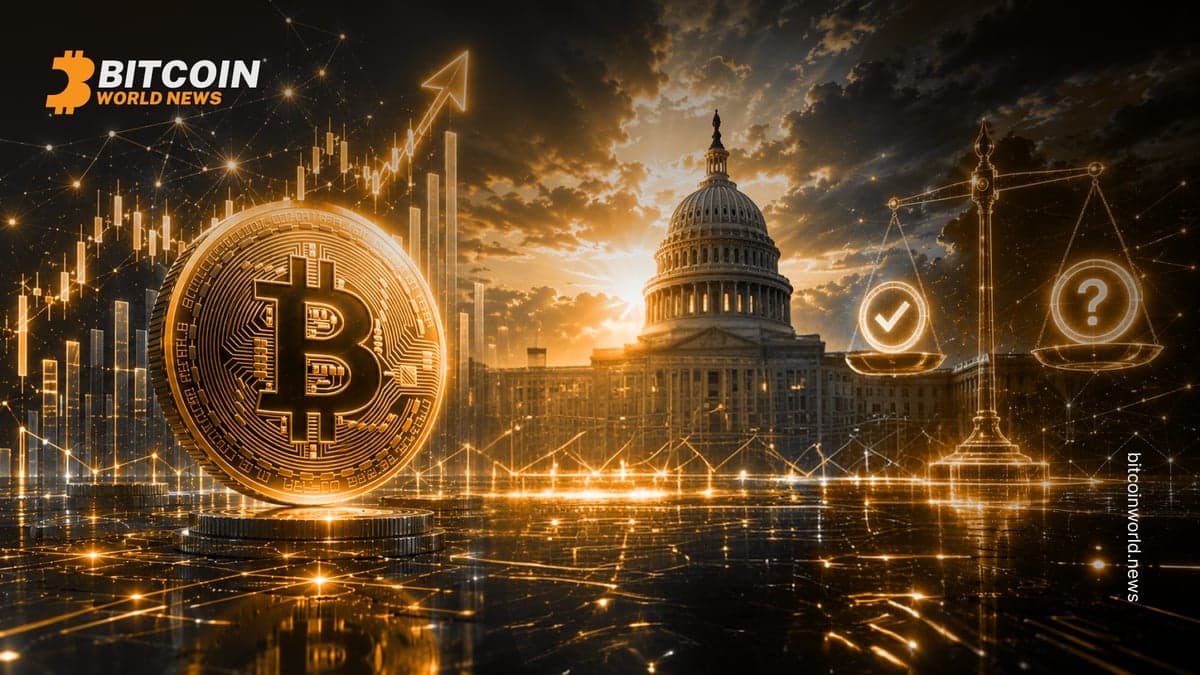
Bitcoin's sharp rally has reignited debate over whether the potential passage of the U.S. CLARITY Act could provide another major catalyst for the crypto market or whether investors have already priced regulatory optimism into Bitcoin.
BTC broke out of a weeks-long trading range and later climbed as high as $72,300 during European trading Thursday. The move came as optimism returned to the crypto market and President Trump again called on Congress to move forward with crypto legislation.
The debate now centers on a key question: could clearer U.S. crypto rules bring new capital into digital assets, or has the market already anticipated the potential benefits?
OKX Europe CEO Sees Regulatory Clarity as a Major Catalyst
Erald Ghoos, CEO of OKX Europe, believes the passage of the CLARITY Act could strengthen confidence in the crypto industry and encourage broader adoption.
According to Ghoos, clearer rules in the world's largest economy could boost institutional trust and create positive effects beyond the United States. He also pointed to increasing institutional participation, improved accessibility to decentralized finance and regulatory developments in both the U.S. and Europe.
Is the CLARITY Act Already Priced Into Bitcoin?
Not everyone at OKX shares the same outlook. Global managing partner Haider Rafique has argued that markets often anticipate major developments before they happen, meaning much of the optimism surrounding potential U.S. crypto regulation may already be reflected in Bitcoin's price.
This creates an important distinction for traders. If regulatory expectations are already priced in, the actual passage of the CLARITY Act may not automatically trigger another major Bitcoin rally.
However, if the legislation creates new opportunities for financial institutions, exchanges and other companies to participate in the crypto market, its longer-term impact could extend beyond the initial price reaction.
Capital May Be Rotating From AI Back Into Crypto
Ghoos believes another factor is supporting Bitcoin's recovery: a potential rotation of capital away from heavily hyped AI and semiconductor stocks and back into digital assets.
AI-related stocks dominated investor attention during much of 2026, while cryptocurrency markets struggled with weaker momentum. More recently, however, some technology and semiconductor names have shown signs of losing momentum as Bitcoin's price begins recovering.
The broader theory is that investors often follow sectors with the strongest momentum. If enthusiasm for AI-related assets cools, part of that capital could eventually look for new opportunities in Bitcoin and the wider crypto market.
MiCA Shows How Regulation Could Reshape Crypto Markets
Ghoos has previously argued that regulation will become a dividing line between crypto businesses that can operate at scale and those unable to meet increasingly demanding compliance requirements.
In Europe, the Markets in Crypto-Assets Regulation, or MiCA, has already changed the competitive environment for crypto companies. Firms seeking to operate under the framework face licensing and compliance requirements that smaller or less-prepared platforms may struggle to meet.
Readers can learn more about the framework through the official European Commission MiCA information.
The regulatory shift could ultimately reduce the number of platforms while strengthening larger exchanges capable of meeting licensing requirements across multiple markets.
Retail Traders Could Follow the Next Major Trend
Crypto trading activity has also weakened in some markets, including South Korea, where trading volumes at major exchanges have declined.
Ghoos argues that this does not necessarily mean retail investors have permanently abandoned crypto. Instead, he believes many traders are moving toward whichever market currently offers the strongest momentum and potential returns.
Under that view, a sustained Bitcoin rally, stronger regulatory clarity or renewed crypto hype could eventually attract retail capital back into the market.
OKX Sees Growth in Europe After MiCA Changes
The changing regulatory environment has also created opportunities for exchanges that remain active in Europe.
Ghoos said OKX experienced a significant increase in EU app downloads after Binance stopped serving European customers following its failure to secure the required MiCA authorization.
The development highlights how regulation may reshape competition rather than simply reduce crypto activity. As compliance rules become stricter, users may migrate toward platforms that can continue operating under the new regulatory framework.
What Bitcoin Investors Should Watch Next
Bitcoin's move above $72,000 has shifted attention from whether the market had reached a bottom to whether the next major catalyst can sustain the recovery.
The progress of the CLARITY Act will remain important, but investors should also monitor institutional demand, capital flows between AI and crypto assets, retail trading activity and broader macroeconomic conditions.
For now, the market remains divided. One view is that U.S. regulatory clarity could unlock a new phase of crypto adoption and bring fresh capital into Bitcoin. The other is that investors have already anticipated much of that outcome.
Whether the CLARITY Act becomes a fresh catalyst or a classic “buy the rumor, sell the news” event may depend on how much of the expected regulatory benefit is already reflected in Bitcoin's price.