Robinhood Pushes for Clear U.S. Rules on Tokenized Stocks
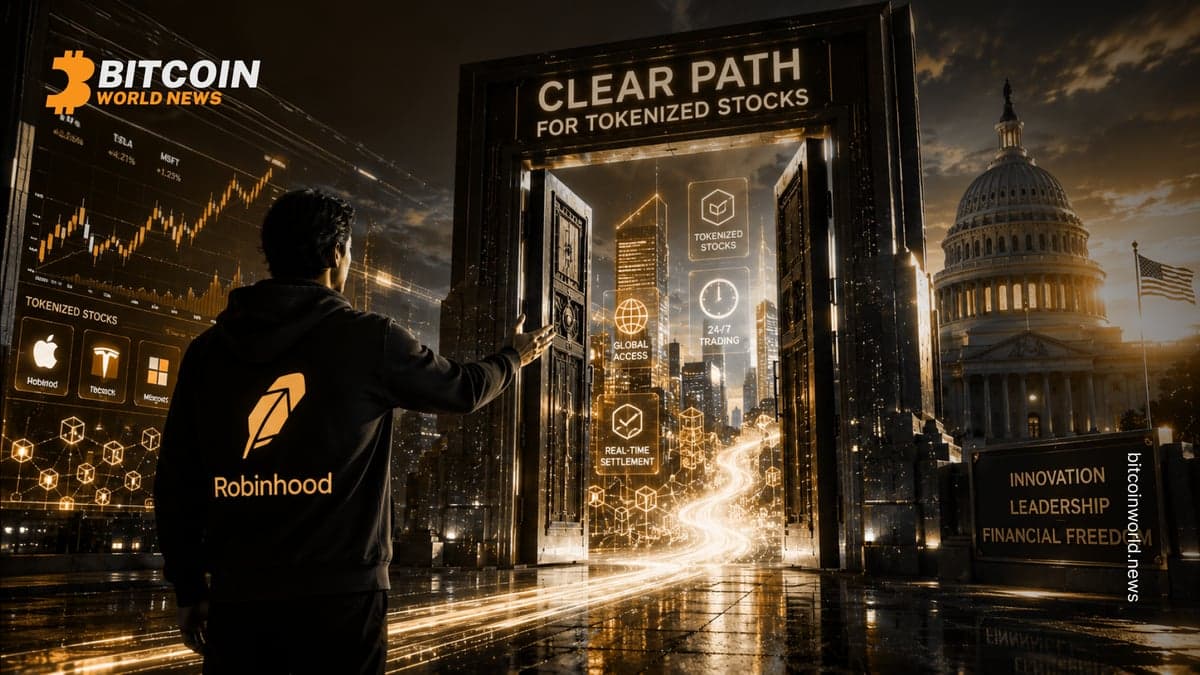
Robinhood CEO Vlad Tenev is calling on U.S. regulators to establish a clearer framework for tokenized stocks, arguing that blockchain-based financial infrastructure could reshape how securities are traded, settled and transferred.
Tenev said the financial industry is entering a global “tokenization supercycle,” with overseas markets moving ahead while regulatory uncertainty continues to limit the development of tokenized securities in the United States.
Robinhood has already introduced tokenized versions of U.S. stocks outside the country, giving users in more than 120 countries economic exposure to more than 190 U.S. equities, including associated dividends.
What Are Tokenized Stocks?
Tokenized stocks are blockchain-based representations of traditional securities or economic exposure to those securities. Robinhood's products are backed 1:1 by underlying stocks, but holders of the tokens do not directly own the corresponding shares.
That distinction is important because traditional stock ownership comes with specific legal rights, including shareholder rights, custody arrangements and regulatory protections. Tokenization does not automatically remove those existing requirements.
For investors, however, blockchain infrastructure could potentially make the movement and trading of financial assets more efficient.
Faster Settlement Could Reduce Market Risk
Tenev's strongest argument for tokenized equities centers on settlement. Traditional U.S. stock trades currently settle under the T+1 system, meaning transactions generally complete one business day after the trade.
Tenev referenced the 2021 GameStop trading frenzy, when Robinhood restricted purchases of certain stocks as clearinghouse collateral requirements increased. He argues that real-time blockchain settlement could reduce the financial pressure created during the period between executing and settling a trade.
The U.S. Securities aCommission nd Exchange provides official information on U.S. securities-market rules, settlement and investor protections.
24/7 Stock Trading Could Become Possible
Tokenization could also extend stock-market access beyond traditional exchange hours. Blockchain networks operate continuously, potentially allowing tokenized securities to trade around the clock rather than being restricted to conventional market sessions.
Robinhood already offers extended U.S. stock trading, including 24/5 access for certain securities. Tenev argues that blockchain infrastructure could eventually make continuous trading a native feature rather than requiring brokers to connect multiple venues and systems.
This could create a financial market that operates more like the internet, with assets moving continuously across compatible platforms.
Tokenized Assets Could Move More Easily
Another potential advantage is asset transfer. Moving securities between traditional financial institutions can involve intermediaries and may take several days depending on the asset and transfer process.
Blockchain-based assets can potentially move between compatible wallets and platforms more directly. However, tokenized securities in the United States would still need to comply with applicable custody, transfer and securities regulations.
That means blockchain technology alone cannot eliminate the legal and operational requirements surrounding regulated financial assets.
U.S. Regulation Remains the Main Barrier
Despite the potential benefits, securities laws remain one of the biggest obstacles to wider tokenized-stock adoption in the United States.
Regulated securities are subject to requirements covering trading, custody, clearing, settlement and investor rights. Moving those assets onto a blockchain does not automatically remove those obligations.
The Financial Industry Regulatory Authority also provides regulatory guidance and investor information relevant to securities trading and digital-asset activities.
Robinhood Is Already Testing the Model Overseas
Robinhood's international tokenized-stock offering demonstrates that the company is already experimenting with blockchain-based equity exposure outside the United States.
The products allow international users to gain economic exposure to U.S. companies without directly holding the underlying U.S. shares. The model gives Robinhood an opportunity to test how tokenized securities could function across borders.
The company sees this as an early stage of a broader transformation that could eventually extend beyond publicly traded stocks.
Tokenization Could Expand Beyond Public Stocks
Tenev has also discussed applying similar blockchain structures to other asset classes, including private companies and real estate.
Private-market assets are generally more difficult for ordinary investors to access and trade. Tokenization could potentially create new ways to represent ownership or economic exposure while making transfers more efficient.
However, these markets would face their own regulatory requirements, particularly around investor eligibility, custody, disclosure and secondary trading.
Tokenized Stocks Need Clear Investor Rights
One of the biggest questions surrounding tokenized equities is what rights investors actually receive.
Tenev has argued that future tokenized stocks should incorporate traditional shareholder rights if regulators permit the structure. That could include economic benefits and potentially governance-related rights associated with conventional equity ownership.
Resolving those questions will be critical if tokenized stocks are eventually expected to become a mainstream alternative to traditional brokerage-held shares.
U.S. Risks Falling Behind Overseas Markets
Tenev's broader argument is that the United States needs to decide how tokenized securities should fit into the existing financial system rather than leaving companies and investors to navigate regulatory uncertainty.
Other jurisdictions are already experimenting with blockchain-based securities and financial infrastructure. If U.S. rules remain unclear, companies could increasingly develop tokenization products outside the country.
That could put American financial institutions and investors at a disadvantage while overseas markets build the infrastructure for the next generation of asset ownership.
The Future of Stock Markets Could Be Onchain
Tokenization could eventually change several fundamental parts of financial markets, from settlement and custody to trading hours and asset transfers.
For Robinhood, the technology represents more than simply putting stocks on a blockchain. Tenev sees it as an opportunity to rebuild the underlying infrastructure of ownership and make financial assets move more freely.
The key question now is whether U.S. regulators will create a framework that allows tokenized securities to develop domestically while maintaining investor protections and market integrity.
If clear rules emerge, tokenized stocks could become an important bridge between traditional finance and blockchain markets. If regulatory uncertainty persists, the United States risks watching other markets develop that infrastructure first.