21Shares Links XRP Demand to Growing XRPL Activity
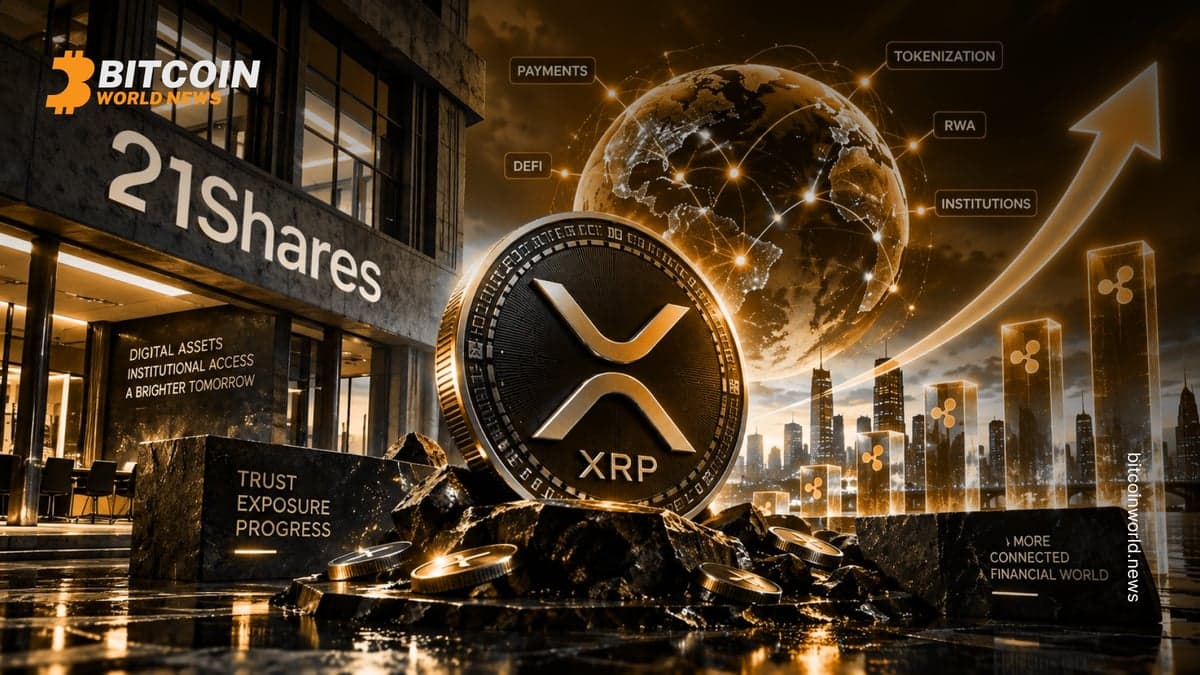
Growing activity on the XRP Ledger could create additional sources of demand for XRP as stablecoins, tokenized assets, payments and decentralized finance expand across the network, according to 21Shares.
In a Sept. 14 statement, the crypto asset manager highlighted the relationship between network activity and XRP demand, pointing to approximately $4 billion in tokenized assets and around $1.6 billion in total RLUSD supply, with more than half of that supply circulating on the XRP Ledger.
“Our thesis is that more activity eventually lifts demand for it, not that it’s denominated in it,” 21Shares said.
The view builds on an analysis published by 21Shares investment strategist Maximiliaan Michielsen on Aug. 12. The firm's analysis describes XRP as a potential bridge asset for moving value between different currencies while also highlighting the role of XRP in XRPL transaction fees and account reserves.
How could greater XRPL activity affect XRP demand?
The connection between XRP and activity on the XRP Ledger comes from several functions built into the network. XRP is the ledger's native asset and is required for transaction costs, while accounts also require XRP reserves.
According to the XRP Ledger's official transaction-cost documentation, each transaction destroys a small amount of XRP as an anti-spam mechanism. The current minimum standard transaction cost is 10 drops, equivalent to 0.00001 XRP, although fees can increase when network load rises.
The ledger also uses XRP for account reserves. The official XRPL reserve documentation says accounts must maintain a minimum XRP balance, while additional reserves can apply to objects held by an account. This gives XRP a role in supporting the basic operation of accounts and applications on the network.
21Shares' broader thesis is that more activity can therefore create more direct utility for XRP. However, increased activity on XRPL does not automatically mean that every tokenized asset or payment is denominated in XRP.
RLUSD adds another layer of XRPL activity
Stablecoins are another major part of the XRP Ledger's expanding use cases. 21Shares highlighted Ripple USD (RLUSD), whose total supply it placed at approximately $1.6 billion, with more than half circulating on XRPL by mid-2026.
Ripple describes RLUSD as a U.S. dollar-backed stablecoin that is natively issued on the XRP Ledger and Ethereum. The company says RLUSD is backed by segregated reserves and is designed for payments, settlement and other financial applications.
The official Ripple documentation for RLUSD on XRPL explains that the stablecoin uses the XRP Ledger's native issued-token functionality. RLUSD transactions on XRPL therefore add activity to the ledger even when the underlying payment is denominated in a dollar-linked asset rather than XRP.
That distinction is important to 21Shares' argument. RLUSD can increase the amount of activity taking place on XRPL, while XRP can continue to have separate roles through transaction fees, reserves and liquidity.
Tokenized assets could expand the network's use cases
Tokenization is another area 21Shares identifies as a potential source of future XRPL activity. The asset manager estimates that tokenized assets on the ledger have reached around $4 billion.
The XRP Ledger already provides native functionality for issuing and trading digital representations of assets. Its official tokenization documentation highlights applications including real-world assets, trading, collateral mobility and financial products.
The network also has a built-in decentralized exchange. According to XRPL's DEX documentation, users can trade XRP against issued tokens or trade different issued tokens against one another. This allows tokenized assets to interact with the ledger's existing market infrastructure.
As tokenized bonds, funds and other financial assets are introduced, more transactions and liquidity activity could take place directly on XRPL. That does not make XRP the denomination of those assets, but it can increase the number of operations requiring the ledger's native infrastructure.
DeFi provides another potential source of activity
The XRP Ledger also supports decentralized finance through its native DEX and automated market maker functionality.
XRPL's official AMM documentation explains that liquidity providers can deposit two assets into an AMM pool and receive LP tokens representing their position. XRP can be one of the assets in an AMM pool, while the other asset can be an issued token.
21Shares estimates that XRPL's DeFi sector remains relatively small, at more than $30 million, but the firm points to lending infrastructure under development as another potential avenue for network growth.
This creates a similar dynamic to tokenization and stablecoins: the activity itself can occur in assets other than XRP, while XRP can still have a role within the ledger's transaction, reserve, liquidity and trading infrastructure.
XRP's bridge-asset role remains important
Beyond its use within XRPL, 21Shares also describes XRP as a bridge asset that payment providers can use to move between different currencies.
The firm's analysis says XRP can be converted into and out of destination currencies, with settlement taking place within seconds and transaction costs around $0.0002, according to the supplied 21Shares research.
This role differs from simply holding XRP as a speculative asset. In a payment flow, XRP can function as an intermediary between two currencies when a direct liquidity route is less practical.
That potential use is particularly relevant to the broader expansion of blockchain-based payments. As more stablecoins and tokenized currencies become available, the ability to move between different forms of digital value becomes an increasingly important part of the infrastructure.
XRPL activity does not automatically create XRP scarcity
The relationship between network growth and XRP demand needs to be viewed carefully. More XRPL transactions can increase the amount of XRP destroyed through transaction fees, while account and object reserves create another source of XRP utility.
However, the quantities involved in transaction fees remain small relative to XRP's overall supply. The XRP Ledger itself describes its transaction costs primarily as an anti-spam mechanism rather than a mechanism designed to create scarcity.
The same distinction applies to stablecoins and tokenized assets. A dollar-backed asset such as RLUSD can generate significant ledger activity without every transaction requiring users to hold XRP as the underlying denomination.
21Shares' thesis is therefore based on multiple forms of XRP utility rather than a claim that all XRPL growth translates directly into XRP demand.
What to watch as XRPL expands
The key metrics to monitor are stablecoin circulation, tokenized-asset issuance, payment activity, DEX and AMM liquidity, and the development of institutional DeFi applications.
21Shares' argument is that if those activities continue expanding, XRP could see greater utility through its roles in transaction fees, reserves, liquidity and bridge transactions. The relationship is not necessarily one-to-one, but broader ledger usage creates more opportunities for XRP to be involved.
For now, the XRP Ledger is expanding beyond its original payments-focused use cases into stablecoins, tokenization and DeFi. Whether that broader ecosystem ultimately produces materially greater XRP demand will depend on how extensively XRP itself is used within those applications.