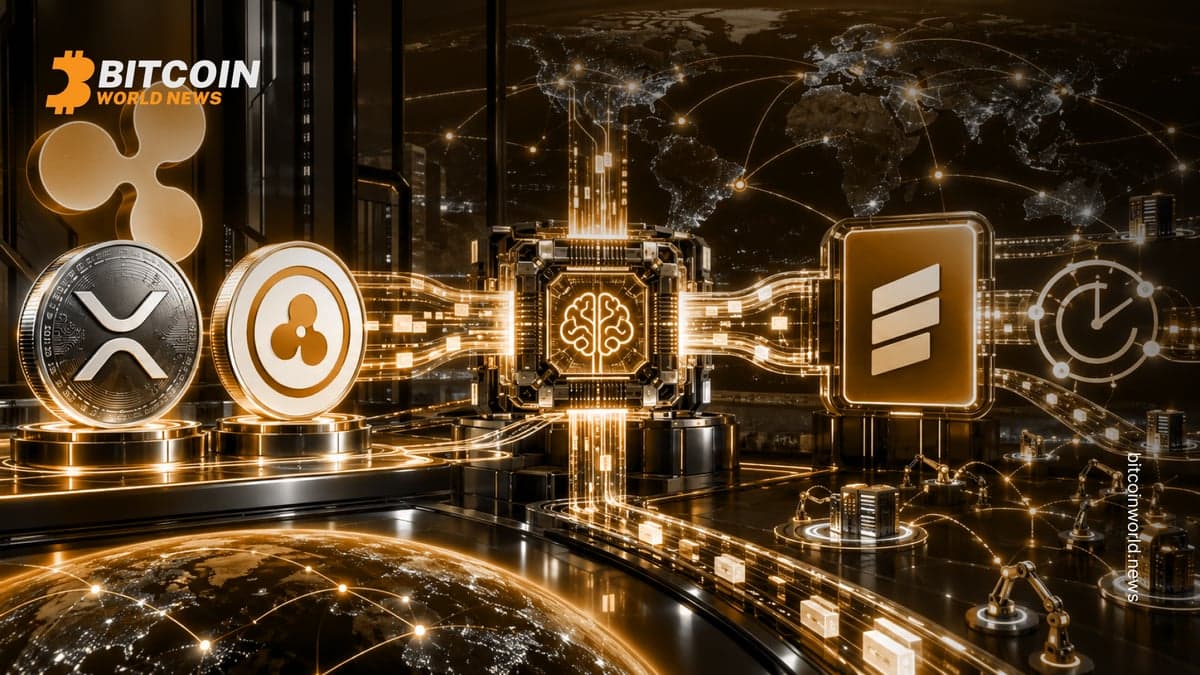
Ripple is expanding the payment capabilities available to developers building AI-powered applications on the XRP Ledger. The latest version of its XRPL AI Starter Kit adds support for the Machine Payments Protocol (MPP) from Stripe and Tempo, along with the Open Wallet Standard, giving developers tools for automated payments and multi-chain wallet management.
The update is part of Ripple's broader effort to make XRP and its RLUSD stablecoin available across emerging machine-to-machine payment applications. According to the RippleX developer announcement, version 1.1 of the starter kit allows developers to work with these open standards while building AI agents that can pay for digital services.
The development comes after Ripple added support for x402, another web payment standard, in June. By supporting both x402 and MPP, Ripple is positioning the XRP Ledger as an option for applications using different payment protocols rather than depending on a single standard.
Ripple Expands the XRPL AI Starter Kit
The XRPL AI Starter Kit is designed to give developers building AI applications a set of tools for connecting agents with blockchain-based payments and wallets.
The latest release introduces MPP support alongside the Open Wallet Standard. The wallet standard is intended to provide a common interface through which software can manage wallets across different blockchain networks, reducing the need for applications to implement separate wallet-management systems for each chain.
RippleX Head of Product Jazzi Cooper highlighted the company's objective in a post on X, writing: “Our job is to make XRP and RLUSD first-class options wherever developers are building.” Jazzi Cooper on X
RLUSD is Ripple's dollar-pegged stablecoin, while XRP is the native digital asset of the XRP Ledger. Supporting both gives developers the option of using a cryptocurrency or a dollar-denominated stablecoin for applications that require automated payments.
How Machine Payments Protocol Works
MPP is designed for situations where software needs to pay for a service automatically while completing a task.
For example, an AI agent could request access to a dataset, computing resources or another digital service. Instead of requiring a person to manually approve and complete each payment, the service can return the cost, the agent can authorize the transaction, and the requested resource can then be provided after payment.
Stripe's explanation of the Machine Payments Protocol describes MPP as an open protocol for machine-to-machine payments. Stripe developed the standard with Tempo, a blockchain focused on payment applications.
This type of workflow is particularly relevant to AI agents because an agent may need to make multiple small payments while carrying out a larger task. Rather than treating payment as a separate manual step, the protocol makes it part of the software interaction.
XRP and RLUSD Become Payment Options for MPP
The XRPL integration gives developers using MPP another blockchain and asset combination to consider when designing automated payment systems.
A service built around MPP could potentially accept XRP or RLUSD through the new XRP Ledger integration. This means the payment standard can sit above the blockchain layer, while the XRP Ledger provides the underlying transaction infrastructure.
Ripple's approach also avoids requiring developers to choose between MPP and x402. The company previously added x402 support and is now adding MPP, allowing applications built around either standard to interact with XRP Ledger-based payments.
The distinction is important because payment protocols and blockchains solve different parts of the overall problem. A protocol defines how a payment request and authorization can work between software, while the blockchain provides the network on which the transaction can be settled.
Open Wallet Standard Adds Multi-Chain Flexibility
The second major addition in version 1.1 is support for the Open Wallet Standard.
AI applications can require wallets to hold assets, authorize transactions and interact with different blockchain networks. A common wallet interface can simplify that process by giving developers a standardized way to interact with wallets rather than building custom implementations for every network.
For developers, that can make it easier to create applications capable of operating across multiple blockchain environments. The goal is not to replace individual blockchain networks, but to provide a common interface for software managing digital assets.
The combination of MPP and the Open Wallet Standard therefore addresses two separate parts of AI payments: how software pays for services and how software manages the wallets used to make those payments.
Ripple Is Supporting Multiple Payment Standards
Ripple's decision to support MPP alongside x402 reflects the growing number of approaches being developed for online and machine-based payments.
x402 is designed around HTTP-based payment interactions, while MPP provides a broader framework for machine payments. By integrating both into the XRPL AI Starter Kit, Ripple is giving developers additional options when designing payment-enabled applications.
The company's earlier x402 integration was part of its push to connect the XRP Ledger with AI and automated-service use cases. The latest release extends that strategy by connecting XRPL to a standard co-authored by Stripe and Tempo.
Developers can explore the XRP Ledger's official documentation for information about the network, while the XRP Ledger GitHub organization provides access to open-source development resources.
What the Update Could Mean for AI Applications
AI agents are increasingly being designed to perform tasks without requiring a user to manually control every step. If those agents need access to paid information, software, computing capacity or other digital resources, automated payment infrastructure becomes an important part of the workflow.
MPP provides a framework for those payments, while the Open Wallet Standard addresses wallet management. Ripple's addition of XRP and RLUSD support means developers can incorporate assets from the XRP Ledger into that architecture.
However, the release itself does not guarantee widespread adoption of machine payments or AI-driven XRP transactions. Developers still need to build applications, services need to accept the supported payment methods, and users or organizations must authorize the relevant payment activity.
For Ripple, the objective is to make XRP and RLUSD available wherever developers are building new payment-enabled applications. The version 1.1 update gives that strategy another connection to the emerging infrastructure being developed around AI agents and automated digital commerce.