Bitcoin Deprioritized as ECB’s de Cos backs tokenized deposits
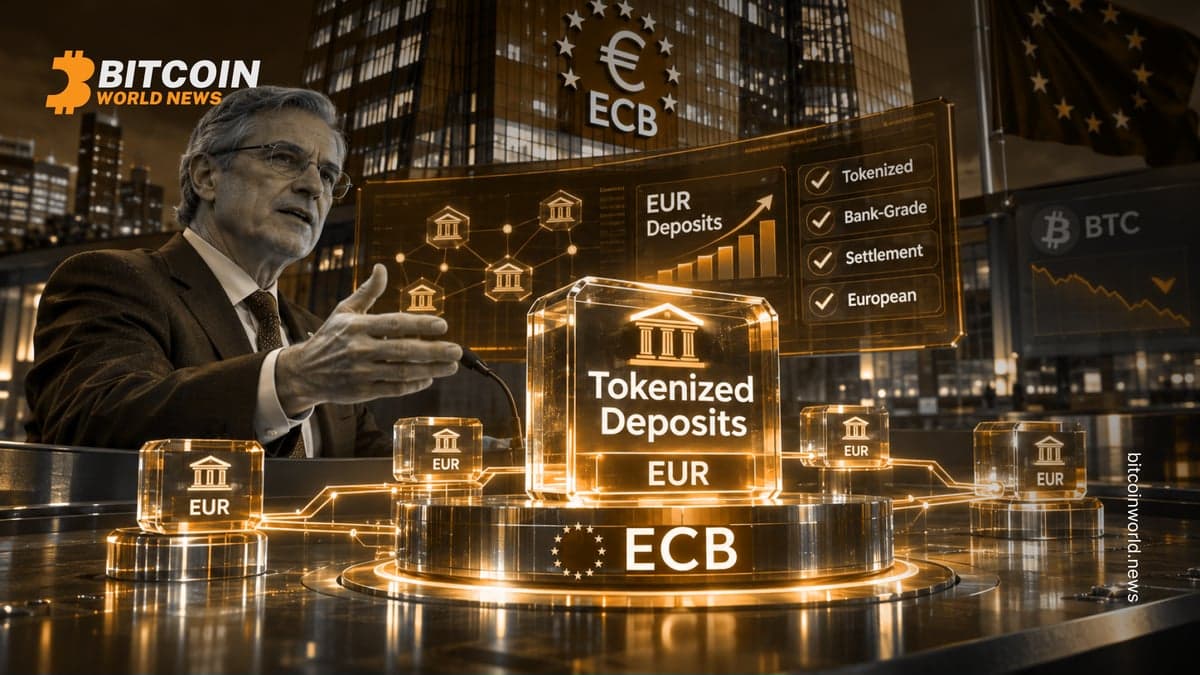
Bitcoin faces a policy headwind as Pablo Hernández de Cos, chosen to succeed Christine Lagarde at the European Central Bank, signaled support for tokenized bank deposits over private digital currencies on Nov. 27, 2026. The incoming ECB chief has warned against banks holding bitcoin, pointing to a cautious regulatory stance.
Bitcoin (BTC) faces a policy setback in Europe as Pablo Hernández de Cos, selected to succeed Christine Lagarde at the European Central Bank, signaled support for tokenized bank deposits built on blockchain rails while cautioning against private digital currencies and banks holding bitcoin. The stance, highlighted on Nov. 27, 2026, underscores a preference for regulated bank money over stablecoins and BTC.
The position places a system-first emphasis on tokenized deposits issued by supervised institutions, rather than privately issued stablecoins or non-sovereign cryptocurrency. It also points to tighter risk expectations for banks with direct bitcoin exposure, setting a tone for prudential policy discussions as leadership changes at the ECB.
Why does the ECB leadership shift matter for bitcoin and stablecoins?
It matters because the incoming central bank chief favors tokenized bank deposits over private digital currencies, and has warned against banks holding bitcoin. That view signals a regulatory preference for on-chain bank money and a cautious approach to stablecoins and BTC, shaping supervisory priorities as the leadership transition gets underway.
Sponsored
Pablo Hernández de Cos’s backing of blockchain-based banking frameworks suggests support for innovations anchored in existing bank licensing and oversight. At the same time, his warnings about private digital currencies and direct bank bitcoin holdings indicate continued scrutiny of non-bank tokens and balance-sheet crypto risk, with potential implications for custody, payments, and capital planning in the euro area.
Instrument
Issuer
Policy stance
Tokenized bank deposits
Regulated banks
Favored
Stablecoins
Private issuers
Cautioned against
Bitcoin (BTC)
N/A (decentralized)
Warned against bank holdings
What is meant by ‘tokenized bank deposits’ in this context?
They are bank liabilities recorded on blockchain infrastructure, issued by supervised institutions under existing rules. The incoming ECB chief’s support indicates a preference for digital money that stays within the regulated banking perimeter, contrasting with private stablecoins and bitcoin that sit outside direct bank issuance and, in the case of BTC, outside centralized governance entirely.
By elevating tokenized deposits, euro-area policy could nudge payments innovation toward bank-native digital instruments. That framing implies banks remain central to digital settlement while private digital currencies face higher scrutiny around consumer protection, prudential risk, and systemic oversight relative to supervised tokenized bank money.
What should market participants watch next?
Watch the leadership handover timeline and early policy signals that clarify how tokenized deposits, stablecoins, and bitcoin will be prioritized under the new ECB chief. Statements to the banking sector on crypto exposure, custody, and payment use cases could define the boundary between permitted on-chain banking activity and higher-risk private digital currencies.
Given the stated caution on banks holding bitcoin, lenders and payment firms may reassess risk appetite until supervisory expectations are reiterated. Conversely, banks exploring blockchain-based deposit tokens may gain momentum if guidance affirms that model within the euro-area regulatory perimeter.
The leadership transition places Europe’s crypto and digital money roadmap at an inflection point: innovation via bank-issued, on-chain deposits, and a restrained posture toward stablecoins and non-sovereign cryptocurrencies like BTC.
This article is for informational purposes only and does not constitute financial, investment, or trading advice. Cryptocurrency markets are highly volatile and carry significant risk. Always conduct your own research (DYOR) and consult a qualified financial advisor before making investment decisions. Past performance does not guarantee future results.
Share
The crypto brief, in your inbox
BTC, markets, and the stories that moved crypto — daily, no noise.