The partnership highlights growing institutional interest in blockchain-based payment infrastructure, but it also raises a key question for XRP investors: Will the new payment flows actually use XRP?
Jeonbuk Bank to use Ripple Payments for cross-border transfers
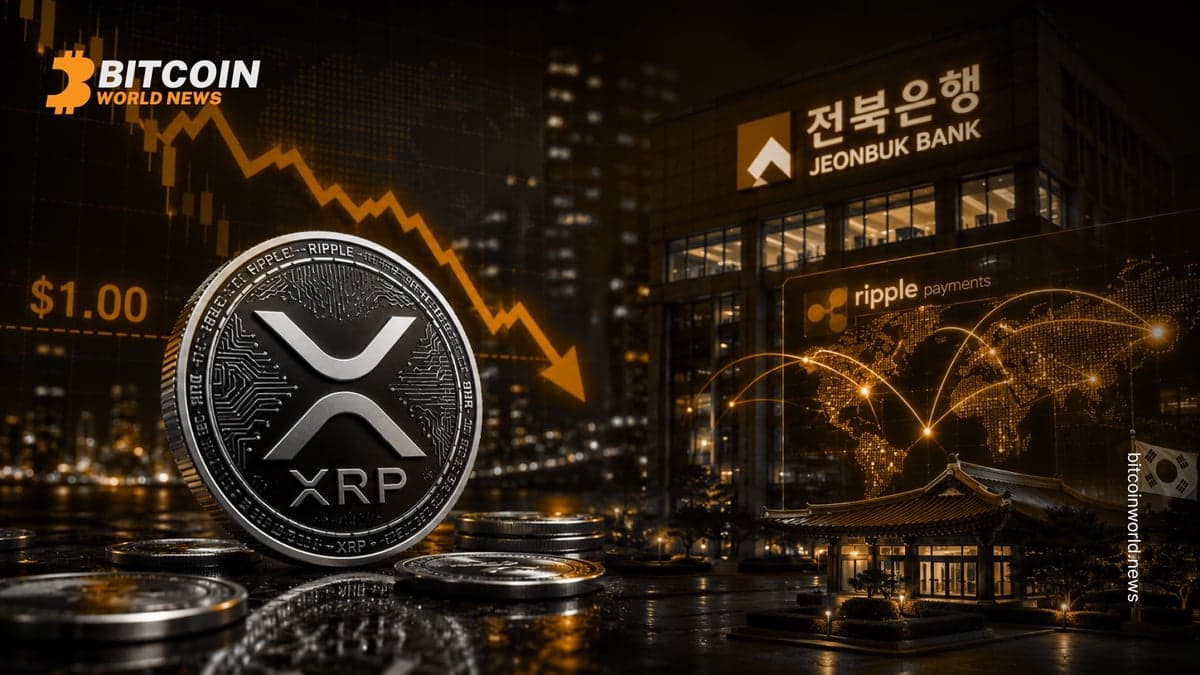
Jeonbuk Bank plans to use Ripple Payments to support 24/7 cross-border transactions for business customers.
The bank, which is based in Jeonju in southwestern South Korea, serves customers and businesses in its home region. Its new payment infrastructure is expected to support businesses such as importers, exporters, IT startups and online content creators.
Traditional international transfers often move through intermediary banks using the SWIFT messaging system. Depending on the transaction route, these payments can take days to complete.
Ripple says its payment infrastructure is designed to make cross-border transactions faster while supporting continuous payment operations.
For more information about the technology behind the service, see the official Ripple Payments documentation.
Jeonbuk Bank's official website also provides information about its banking and international remittance services: Jeonbuk Bank official website.
XRP or RLUSD? Ripple has not clarified the settlement asset
The biggest issue for XRP holders is whether the new payment service will generate direct demand for XRP.
Ripple's announcement described the solution as supporting near-real-time stablecoin cross-border settlement, but it did not specify which digital asset would be used for Jeonbuk Bank's transactions.
That distinction is becoming increasingly important as Ripple expands RLUSD, its U.S. dollar-backed stablecoin, across institutional payment and settlement use cases.
Ripple describes RLUSD as a dollar-backed stablecoin designed for payments, remittances, treasury flows and other financial applications. Ripple’s official RLUSD and payments information
If Jeonbuk Bank uses RLUSD rather than XRP for settlement, the partnership could strengthen Ripple's institutional payments business without necessarily creating equivalent buying demand for XRP.
That helps explain why Ripple's expanding network of institutional partnerships has not always translated directly into stronger XRP price performance.
Ripple continues expanding in South Korea
The Jeonbuk Bank agreement follows other Ripple partnerships involving South Korean financial institutions during 2026.
Ripple has also expanded its presence in the country's financial sector through custody and wallet infrastructure initiatives involving Kyobo Life Insurance and Kbank.
The latest deal reflects a broader push by financial institutions to develop digital-asset capabilities and modernize international payment infrastructure.
Ripple says its broader platform supports financial institutions across payments, custody and stablecoin services. Ripple official website
For Ripple, this creates an opportunity to establish its technology within traditional financial institutions.
For XRP investors, however, the more important issue remains whether institutional adoption translates into actual demand for the XRP token.
XRP price remains under pressure
The latest partnership comes at a difficult time for XRP.
The token previously traded above $3 during last year's highs but has since weakened and gradually moved toward the $1 level.
XRP eventually slipped below $1 as Ripple continued announcing partnerships with banks, asset managers and other financial institutions.
This creates a clear disconnect between the growth of Ripple's business and the performance of XRP.
The two are related, but they are not identical.
Ripple can expand its payment infrastructure using different assets and settlement mechanisms, while XRP's price depends on market demand for the token itself.
XRP Ledger continues to develop
Another important part of the ecosystem is the XRP Ledger (XRPL), the public blockchain associated with XRP.
The official XRP Ledger site describes XRPL as a decentralized, public blockchain designed for businesses and financial applications, including cross-currency payments and tokenized assets. Official XRP Ledger website
Tokenized real-world assets on the XRP Ledger are worth approximately $1.38 billion, according to the figures cited in the original report, with roughly $845 million attributed to RLUSD.
That means RLUSD represents more than three-fifths of the value of assets issued on the ledger.
The development illustrates how Ripple's broader ecosystem is becoming increasingly focused on stablecoins and tokenized assets alongside XRP.
XRP traders remain bullish despite weak sentiment
While XRP's spot price has weakened, derivatives traders continue to position for a potential recovery.
Futures open interest stood at approximately $2.78 billion this week, indicating substantial capital remains active in XRP derivatives markets.
On Binance, more than three accounts were holding long XRP positions for every one holding a short position. A similar long-to-short ratio was seen on OKX.
However, social sentiment has moved in the opposite direction.
Commentary surrounding XRP across social platforms has become more negative over the past three months, creating a notable divergence between derivatives positioning and broader market sentiment.
Traders appear to be betting on a rebound even as XRP remains below the psychologically important $1 level.
Why the Ripple partnership may not immediately boost XRP
The Jeonbuk Bank partnership demonstrates that institutional demand for Ripple's payment infrastructure continues to develop.
However, investors should distinguish between Ripple adoption and XRP adoption.
If banks use Ripple's infrastructure while settling transactions through stablecoins such as RLUSD, the growth of Ripple Payments may not produce the same direct demand for XRP that XRP-based settlement could generate.
That distinction is becoming increasingly important as stablecoins gain a larger role in institutional payments.
At the same time, XRP remains an important part of the broader XRP Ledger ecosystem and continues to be actively traded across global cryptocurrency markets.
What happens next for XRP?
XRP's move below $1 puts renewed attention on its ability to regain the psychological price level.
The combination of billions of dollars in futures open interest, strong long positioning and continued institutional developments around Ripple could provide potential catalysts for a recovery.
But the market will likely continue watching whether Ripple's new banking partnerships generate actual XRP usage or primarily increase adoption of Ripple's payment infrastructure and RLUSD.
For now, Ripple's institutional expansion and XRP's market performance remain on different paths.
The Jeonbuk Bank partnership is another step forward for Ripple's global payments strategy, but until the settlement asset is confirmed, it should not automatically be treated as a direct bullish catalyst for XRP.