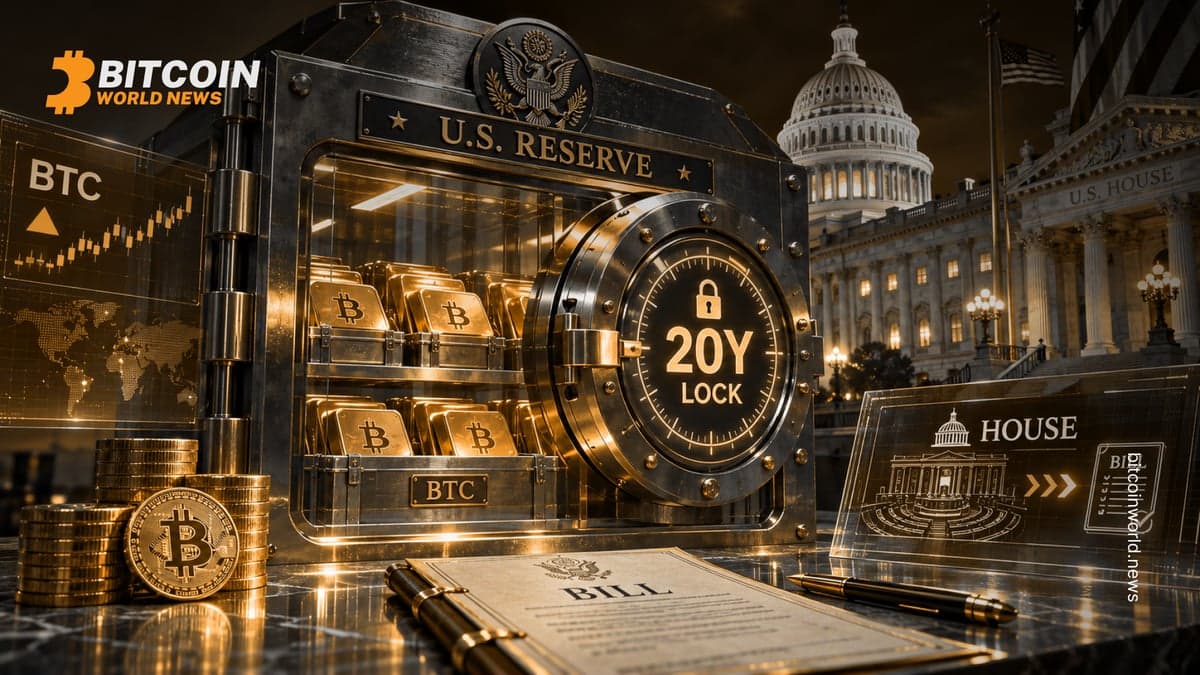
Bitcoin (BTC) entered the U.S. legislative agenda in force as a bill to establish a Strategic Bitcoin Reserve cleared committee on Nov. 26, 2026, and is now eligible for a full House vote. The legislation would lock U.S. government-held bitcoin for 20 years, turning an administration policy into federal statute under a tight timeline.
The measure seeks to formalize long-term custody of federally held BTC and restrict liquidation for two decades. Advancing out of committee places the bill on the House calendar, but the window for floor action is limited, raising procedural and scheduling stakes in the days ahead.
What would a 20-year lock on U.S. government bitcoin do?
The bill would bar the sale of government-held bitcoin for 20 years, converting an executive policy into law and committing federal BTC to long-term reserve status. By codifying a Strategic Bitcoin Reserve, it aims to reduce policy whiplash around dispositions of seized or owned cryptocurrency and signal a durable holding framework.
Locking federal BTC for two decades would curtail discretionary auctions that have historically added supply to the market during enforcement cycles. A statutory reserve could also create clearer guardrails for agencies that take custody of digital assets and set expectations for market participants tracking government wallets. The policy’s effect ultimately hinges on the size and composition of federal bitcoin balances at any given time, which can fluctuate with seizures and recoveries.
How close is the House to a vote, and what deadlines apply?
The bill is now eligible for a House floor vote after clearing committee, but it faces a tight deadline to be scheduled and considered. The compressed timetable heightens the possibility that calendar constraints, rather than substantive amendments, determine the next step in the process.
Committee approval is a key procedural gate, moving the proposal from drafting and markup to potential debate and roll call. With limited days left on the legislative calendar, leadership decisions on floor time and procedural rules will dictate whether the measure advances or stalls. If the bill is not called up within the current window, supporters would likely need to restart or re-sequence the effort under a new timetable.
The 20-year horizon embedded in the legislation underscores its intent: to shield federal bitcoin from near-term budget balancing or opportunistic disposals and to align cryptocurrency reserve management with multiyear policy planning.
What should investors watch next?
Watch the House schedule for placement on the floor calendar and any announced rules governing debate and amendments. A swift move to consideration would signal political momentum, while slipping past the near-term deadline would indicate procedural headwinds rather than a definitive policy rejection.
Traders and institutional desks will track any updates on timing alongside on-chain observations of government-linked wallets. While the bill does not alter current holdings immediately, codifying a 20-year lock could reshape expectations for supply over multi-year horizons, a factor that institutional analysts weigh when modeling liquidity and risk in the cryptocurrency market.
For now, the legislative clock is the key variable. If the House moves before the deadline, the proposal’s long-dated reserve design will face its first real test on the chamber floor.