CZ Targets Bank of America Over $1.21B AML Penalty
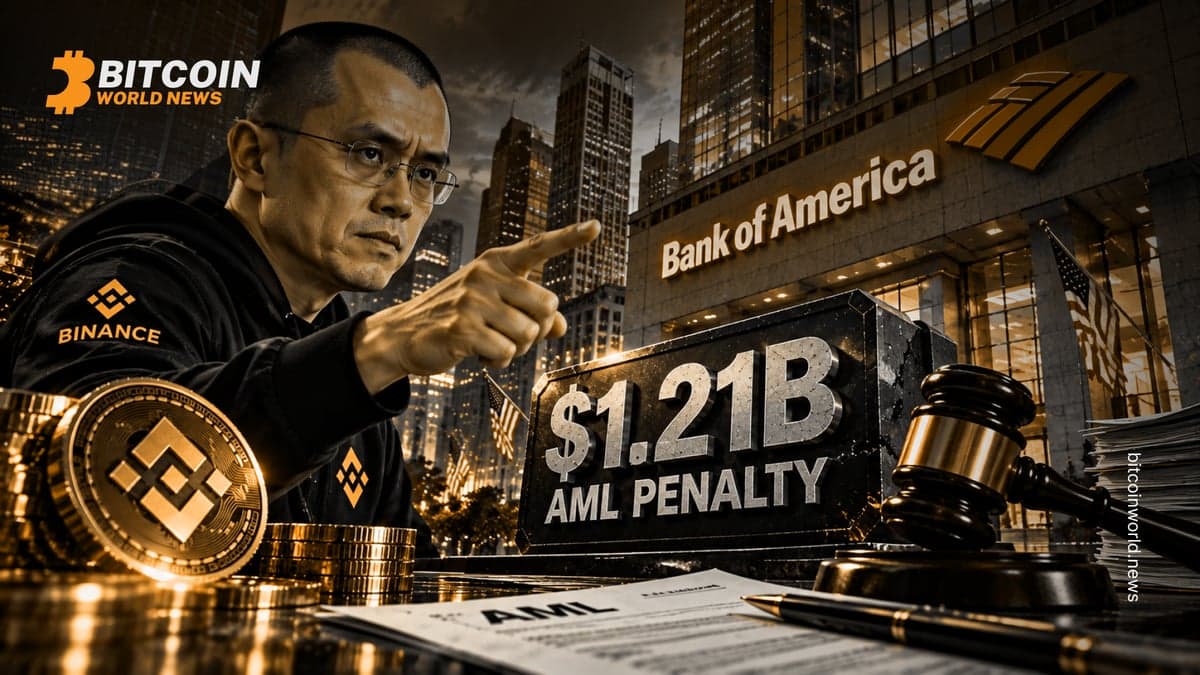
Bank of America was hit with more than $1.21 billion in penalties for anti-money laundering and sanctions violations on Wednesday, drawing pointed criticism from Binance founder Changpeng Zhao. Regulators said the bank failed to timely report over $5 billion in suspicious transactions, while no executives faced criminal charges, spotlighting a stark accountability gap.
Bank of America was hit with more than $1.21 billion in federal penalties for anti-money laundering and sanctions violations on Wednesday, prompting sharp public criticism from Binance founder Changpeng Zhao. Regulators said the bank failed to timely report over $5 billion in suspicious transactions. No executives faced criminal charges, a contrast Zhao highlighted as commentators amplified the debate.
The bank admitted to willfully violating the Bank Secrecy Act, underscoring persistent compliance lapses in traditional finance even as crypto platforms face intensifying scrutiny. Zhao’s remarks zeroed in on the accountability divide, focusing attention on how enforcement outcomes differ between large banks and digital asset firms.
What did regulators penalize Bank of America for?
Regulators imposed more than $1.21 billion in penalties after finding the bank failed to timely report over $5 billion in suspicious transactions and admitted to willfully violating the Bank Secrecy Act. The action centers on anti-money laundering controls and sanctions compliance, areas where timely detection and reporting are core obligations for large financial institutions.
The enforcement underscores that gaps in suspicious activity monitoring and sanctions screening can carry multibillion-dollar consequences. In this case, officials concluded the bank’s controls and reporting cadence fell short, resulting in both AML and sanctions-related penalties. The admission of willful violations elevates the seriousness of the findings, signaling deficiencies were not limited to technical or isolated errors.
Item
Amount
Federal penalties assessed
More than $1.21 billion
Suspicious transactions not timely reported
More than $5 billion
Why does CZ’s response matter to crypto and compliance?
Zhao’s reaction matters because it spotlights perceived asymmetry in enforcement: a major bank paid over $1.21 billion and admitted willful Bank Secrecy Act violations, yet no executives faced criminal charges. His critique resonates across crypto, where firms and founders often face aggressive actions for AML and sanctions lapses.
By highlighting the outcome, Zhao sharpened a broader industry conversation over parity in compliance expectations and penalties across traditional banking and cryptocurrency platforms. Other crypto commentators joined the discussion, reflecting concern that enforcement frameworks can differ materially depending on the institution’s profile. That debate has implications for how market participants calibrate risk, invest in surveillance controls, and interpret regulatory signals.
What should stakeholders watch next?
Stakeholders should watch for whether the penalty prompts further enhancements to suspicious activity monitoring and sanctions screening programs, and whether regulators pursue additional actions targeting governance and individual accountability. The size of the penalty and the willful violation admission will likely intensify calls for demonstrable improvements in AML controls across large financial institutions.
For crypto firms, the episode may reinforce the need to evidence parity or exceed banking standards in transaction monitoring, sanctions checks, and timely filings. As the dialogue evolves, policymakers could revisit how penalties and personal liability are applied across sectors to ensure consistent deterrence and market integrity.
Compliance context
The Bank Secrecy Act requires robust AML programs, recordkeeping, and timely reporting of suspicious activity. Sanctions rules demand effective screening and interdiction. Failures at the scale cited here—over $5 billion in unreported suspicious transactions—underscore the cost of control gaps and the market’s scrutiny when outcomes diverge between banking and digital asset firms.
This article is for informational purposes only and does not constitute financial, investment, or trading advice. Cryptocurrency markets are highly volatile and carry significant risk. Always conduct your own research (DYOR) and consult a qualified financial advisor before making investment decisions. Past performance does not guarantee future results.
Share
The crypto brief, in your inbox
BTC, markets, and the stories that moved crypto — daily, no noise.