Franklin Templeton Gets SEC Clearance for Tokenized BENJI
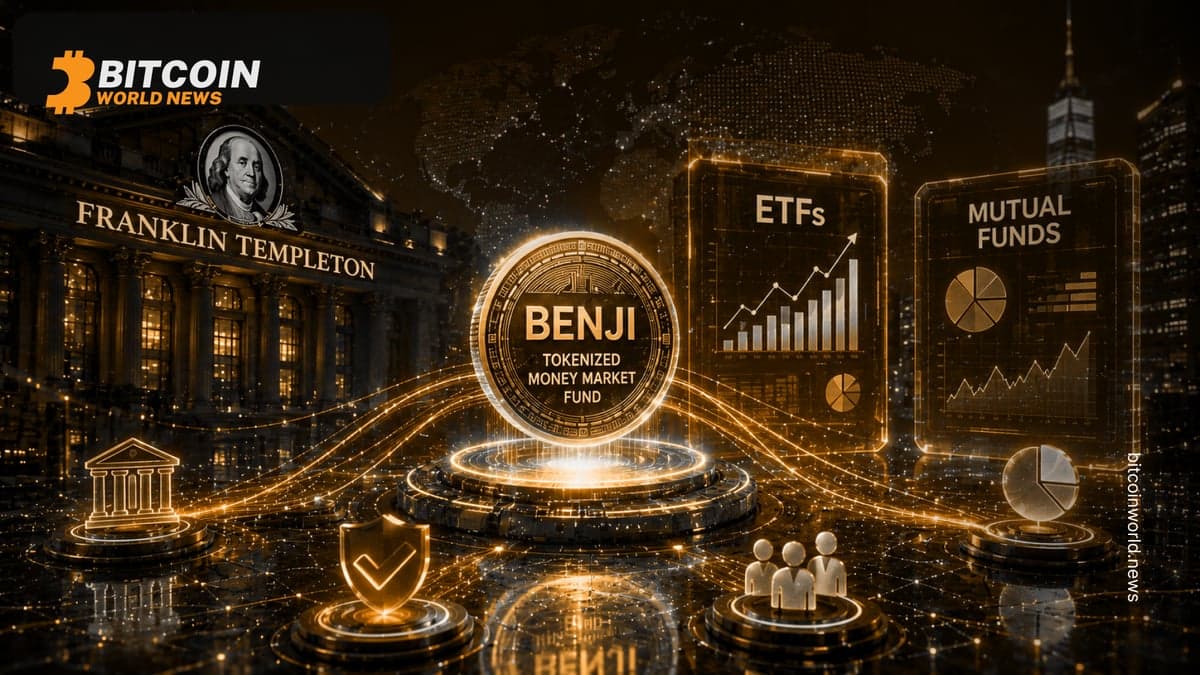
Franklin Templeton is taking tokenization deeper into traditional asset management by planning to use its tokenized BENJI money-market fund inside conventional ETFs and mutual funds.
The move follows a U.S. Securities and Exchange Commission no-action position that allows Franklin funds to use the tokenized money-market product for cash management and collateral purposes. SEC no-action position for Franklin Templeton
The structure could allow investors to gain indirect exposure to blockchain-based financial infrastructure without having to directly purchase or manage tokenized investment products.
BENJI Could Become Part of Traditional Funds
Franklin Templeton plans to use its Franklin OnChain U.S. Government Money Fund, commonly known as BENJI, as a holding or collateral asset inside ETFs and mutual funds.
The strategy could begin as early as the fourth quarter, although individual fund boards would still need to approve the implementation.
The SEC's clearance is significant because it provides a regulatory pathway for a digitally native money-market product to be incorporated into conventional investment structures.
Franklin Templeton has already established BENJI as part of its digital-assets strategy, making the latest development an expansion of an existing tokenization model rather than an entirely new product.
Tokenization Moves Beyond Digital Wrappers
The development represents a broader shift in how financial institutions are approaching tokenization.
Rather than simply creating a blockchain-based version of an existing investment product, Franklin Templeton is looking to make tokenized assets part of the underlying infrastructure of traditional funds.
The firm's digital-assets platform has already supported tokenized fund distribution through blockchain-based wallets. Franklin Templeton Digital Assets
Using BENJI inside conventional portfolios could potentially make cash management more efficient while giving fund managers another tool for managing liquidity and collateral.
However, the proposed structure would still operate within existing fund rules and would require the necessary approvals before implementation.
Franklin's Tokenized Fund Strategy Continues to Expand
Franklin Templeton has become one of the major traditional asset managers experimenting with blockchain-based financial products.
Its Franklin OnChain U.S. Government Money Fund provides investors with exposure to a government money-market strategy while using blockchain technology for transaction and recordkeeping infrastructure.
The latest SEC position could broaden the potential use cases for that structure.
Instead of limiting tokenized assets to investors specifically seeking blockchain-based products, Franklin could potentially place them within familiar investment vehicles such as ETFs and mutual funds.
That could make tokenization less visible to investors while simultaneously making it more deeply embedded in traditional financial markets.
Wall Street's Tokenization Push Gains Momentum
Franklin Templeton's move comes as the market for tokenized real-world assets continues to expand.
Tokenization allows financial assets such as funds, securities and other instruments to be represented on blockchain networks. Supporters argue that the technology can improve settlement, transferability, transparency and collateral management.
The tokenized asset market has grown substantially as banks, asset managers and financial infrastructure companies explore blockchain-based settlement and investment products.
Investors can monitor the broader tokenized-asset market through RWA.xyz.
Franklin Templeton's approach is notable because it focuses not only on creating tokenized products but also on using those products within the traditional financial system.
Why Tokenized BENJI Matters for ETFs
The potential use of BENJI inside ETFs could have implications beyond Franklin Templeton.
Traditional ETFs routinely hold cash and cash-like assets as part of their portfolio management. If tokenized money-market funds can serve those functions under an approved regulatory structure, blockchain-based assets could gradually become part of the operational infrastructure behind conventional investment products.
That could create demand for tokenized assets without requiring investors to change how they access financial markets.
In other words, investors could interact with a familiar ETF while blockchain technology operates further down the investment stack.
Tokenized Assets Could Improve Collateral Management
One potential application is collateral management.
Traditional financial markets often require assets to move between different intermediaries, creating operational delays and additional administrative processes.
Tokenized assets can potentially be transferred and settled using blockchain infrastructure, depending on the applicable rules and network.
For asset managers, this could eventually create more efficient ways to manage liquidity and collateral across portfolios.
Franklin Templeton's SEC-cleared structure therefore represents more than another tokenized fund launch. It could demonstrate how blockchain-based assets can become components of established financial products.
What Franklin Templeton's Move Means for Tokenization
The significance of BENJI lies in how the technology is being integrated.
Earlier tokenization efforts largely focused on creating blockchain versions of traditional products. Franklin's latest strategy moves toward using tokenized assets inside traditional financial products.
That distinction could become increasingly important as asset managers experiment with blockchain-based settlement, collateral and liquidity management.
If the structure receives the necessary fund-level approvals and proves effective, other asset managers could explore similar models.
What Investors Should Watch Next
The next major step will be whether Franklin Templeton's individual funds receive the necessary board approvals to begin using BENJI.
Investors should also watch for additional tokenized products from Franklin Templeton and other major asset managers, as well as further SEC guidance on how tokenized securities and funds can interact with traditional financial markets.
The broader trend suggests that tokenization is gradually moving beyond a niche digital-asset concept.
Franklin Templeton's BENJI strategy could mark another step toward blockchain becoming part of the underlying infrastructure of traditional asset management — potentially putting tokenized assets inside the funds investors already use rather than requiring investors to seek out tokenized products themselves.