The difference matters for Bitcoin because the growth of tokenized Treasuries, credit products and other real-world assets could eventually expand the amount of institutional capital interacting with BTC-based financial markets.
The key question is therefore not simply how much value has been tokenized.
It is how much of that value can actually be used as collateral, traded, borrowed against or connected to Bitcoin liquidity.
Tokenized RWA Numbers Can Be Misleading
The tokenized real-world asset market has grown rapidly, reaching tens of billions of dollars across public blockchains.
However, measuring utilization is difficult because many tokenized assets were never designed for constant onchain trading or DeFi activity.
Private credit is a good example.
A large portion of tokenized RWA value comes from private-credit products. These assets traditionally have limited liquidity and longer redemption periods. Putting them on a blockchain does not automatically transform them into instantly tradable collateral.
That means counting every tokenized asset in the denominator can make onchain utilization appear artificially low.
The same issue applies to tokenized money-market funds and institutional products that operate under strict transfer restrictions.
A token can exist on a blockchain without being freely composable with decentralized applications.
Three Types of Tokenized Assets
The current market can broadly be divided into three categories.
Restricted Assets
Some tokenized products cannot easily move between wallets because of investor eligibility requirements, whitelists or regulatory restrictions.
These assets have limited DeFi utility by design.
Strategic Holdings
Other assets are technically usable but are held for reasons unrelated to DeFi.
An institution may hold a tokenized Treasury product because it wants exposure to short-term government debt, for example, rather than because it plans to use the asset as collateral.
Low utilization in this case does not necessarily indicate weak demand.
Offchain Collateral
The third category is arguably the most important.
Some tokenized assets are already being used as collateral for trading and institutional financial activity without being deposited directly into publicly visible DeFi smart contracts.
This activity can be difficult for conventional DeFi analytics platforms to measure.
That creates a significant blind spot when analysts try to determine how productive tokenized assets really are.
Bitcoin Could Benefit From Better RWA Collateral
For Bitcoin, the development of tokenized collateral could become increasingly important.
Bitcoin remains the largest crypto asset by market capitalization and one of the most widely held digital assets by institutions.
However, much of the traditional financial infrastructure surrounding BTC still operates separately from onchain markets.
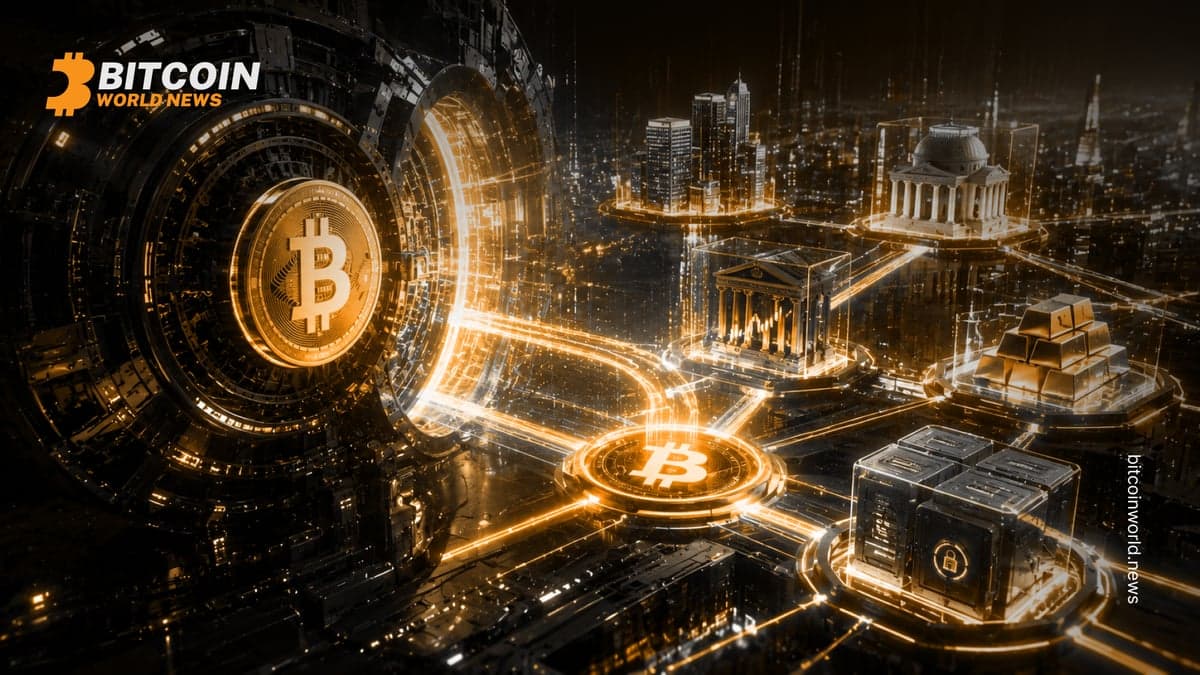
Tokenized Treasuries, money-market funds and other regulated assets could help bridge that gap.
Instead of converting tokenized assets into fiat and then purchasing BTC through traditional financial infrastructure, institutions could potentially use tokenized collateral directly within digital-asset markets.
That could create a more efficient capital stack.
For example, a tokenized Treasury could potentially be used as collateral for a BTC-related position, allowing an investor to maintain exposure to a yield-generating traditional asset while accessing Bitcoin liquidity.
The broader the collateral ecosystem becomes, the more financial applications can potentially be built around BTC.
Settlement Speed Remains the Biggest Problem
There is still a major obstacle: settlement.
Crypto-native assets can generally move almost instantly.
Bitcoin itself settles through a blockchain designed specifically for decentralized value transfer, while stablecoins and many DeFi assets can be transferred and composed with smart contracts around the clock.
Traditional financial assets operate differently.
Tokenized funds may still have T+1 or T+2 settlement, while some private-credit products can have redemption periods lasting weeks or months.
That creates a mismatch.
A DeFi market may be able to execute a transaction in seconds, but the underlying real-world asset could take days to settle.
This makes strategies that depend on repeated leverage or rapid collateral recycling significantly more difficult.
Tokenization Alone Isn't Enough
The lesson for Bitcoin investors is important.
Putting an asset on a blockchain does not automatically make it useful.
The real value comes when that asset can interact with other financial products.
A productive tokenized asset should ideally be capable of being:
Used as collateral
Borrowed against
Traded efficiently
Integrated with BTC markets
Redeemed within a predictable timeframe
Connected to compliant settlement infrastructure
Without those capabilities, tokenization can simply become a digital wrapper around an otherwise traditional financial product.
Stablecoins Could Become the Missing Settlement Layer
Stablecoins may play an important role in solving this problem.
Tokenized securities need reliable digital settlement money if they are going to interact with institutional crypto markets.
Stablecoins provide a potential bridge between traditional assets and blockchain-based markets by allowing transactions to settle in digital dollars rather than through traditional banking rails.
This is particularly relevant for Bitcoin.
BTC markets already operate globally and around the clock, while traditional financial markets remain constrained by banking hours, settlement cycles and jurisdictional restrictions.
As stablecoin infrastructure develops, tokenized RWAs could potentially become easier to connect with BTC trading and lending markets.
Regulation Could Accelerate the Transition
Regulation will also determine how quickly this market develops.
The U.S. has been moving toward clearer rules for stablecoins and digital assets, while regulators continue debating the appropriate framework for tokenized securities and crypto market infrastructure.
The GENIUS Act has strengthened the regulatory foundation for U.S. dollar stablecoins, while broader market-structure legislation could eventually provide clearer rules for tokenized securities and digital-asset markets.
For institutional investors, regulatory clarity may be just as important as technology.
Banks, asset managers and large funds are unlikely to deploy significant capital into tokenized markets if they cannot clearly determine how custody, settlement, collateral and compliance requirements work.
Bitcoin's Institutional Market Could Expand
The growth of tokenized assets does not necessarily compete with Bitcoin.
Instead, it could strengthen the infrastructure around BTC.
Bitcoin can serve as the primary digital reserve asset, while tokenized Treasuries, credit products and other RWAs provide additional forms of collateral and yield-bearing assets.
That creates the possibility of a broader financial ecosystem in which Bitcoin sits alongside tokenized traditional assets rather than operating separately from them.
As institutional participation grows, this distinction could become increasingly important.
What Investors Should Watch
Rather than focusing only on the total value of tokenized assets, investors should watch several more meaningful metrics.
Collateral Usage
How much tokenized RWA value is actually being used as collateral?
Bitcoin Integration
Are tokenized assets becoming directly connected to BTC lending, trading or derivatives markets?
Settlement Times
Can investors enter and exit positions quickly enough for modern digital markets?
Stablecoin Liquidity
Is there enough regulated stablecoin liquidity to support large-scale settlement?
Institutional Adoption
Are banks, asset managers and trading firms using tokenized assets for real financial activity rather than simply launching pilot projects?
These metrics will provide a much better indication of whether tokenization is creating genuine financial utility.
Bottom Line
The real opportunity in tokenized assets is not the number of assets placed on blockchains.
It is what those assets can do once they arrive onchain.
If tokenized Treasuries, credit products and other RWAs become usable collateral with reliable settlement, they could significantly expand the financial infrastructure surrounding Bitcoin.
That could give institutions more ways to move capital between traditional finance and BTC markets while reducing reliance on fragmented settlement systems.
For Bitcoin, the next stage of institutional adoption may therefore involve more than spot ETFs and corporate treasury strategies.
It could involve a broader onchain financial system where BTC acts as a core digital asset and tokenized real-world assets provide collateral, liquidity and yield around it.
The industry will ultimately be judged not by how much value gets tokenized, but by how much of that value becomes productive — and how easily it can connect to Bitcoin's global liquidity.