

Bitcoin Mining Is Now 56.7% Sustainable — And It Could Get Even Greener
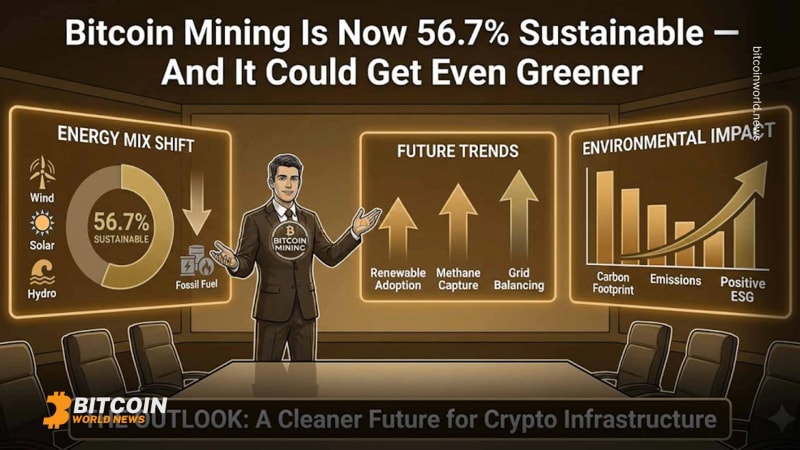
Bitcoin’s environmental profile is undergoing a rapid transformation. More than 56.7% of the Bitcoin network is now powered by sustainable energy, a dramatic increase from just a few years ago, according to new research shared by technology investor and ESG analyst Daniel Batten.
In a detailed post published on Thursday, Batten argued that Bitcoin mining is evolving beyond energy consumption and may become a powerful driver of clean energy expansion.
“Bitcoin mining could be the most important sustainability innovation of this century,” Batten said.
From 34% to 56.7% in Just Four Years
Back in 2021, only about 34% of Bitcoin mining relied on sustainable energy sources. Updated figures compiled by Batten in collaboration with Willy Woo and the Digital Assets Research Institute (DARI) show that figure has climbed to 56.7% in a little over four years.
The data reflects growing reliance on renewable power sources such as wind, solar, hydro, and other low-emission energy solutions.
How Bitcoin Mining Helps Renewable Energy Scale
Batten emphasized that Bitcoin mining doesn’t just consume green energy—it actively helps renewable projects become viable.
Solving Renewable Grid Bottlenecks
Many renewable energy projects face interconnection delays of 10 to 15 years before they can sell electricity to the grid. Bitcoin miners can act as immediate buyers, generating revenue while projects wait for grid approval.
This demand can:
- Reduce project payback periods from eight years to roughly three and a half
- Improve investor confidence
- Accelerate deployment of new solar and wind capacity
Bitcoin mining’s flexible energy demand also helps stabilize grids that rely on intermittent renewable sources.
Turning Waste Heat Into Clean Energy Solutions
Heating accounts for roughly 50% of global energy consumption, most of it fueled by fossil fuels. Bitcoin mining offers a novel alternative by repurposing waste heat generated during mining operations.
Notable examples include:
- MARA’s district heating project in Finland, which uses mining heat to warm 80,000 residents, about 2% of the country’s population
- Bitcoin-powered home heating systems now available commercially
- Solar-powered mining operations providing heat for greenhouses in the Netherlands
These use cases replace fossil fuel heating with clean electric alternatives.
Reviving Dormant Renewable Technologies
Bitcoin mining is also helping fund energy innovation.
According to Batten, mining operations have contributed to reviving Ocean Thermal Energy Conversion (OTEC)—a renewable technology shelved since the 1980s due to high infrastructure costs.
By offering off-grid revenue opportunities, Bitcoin miners can support experimental or remote energy projects without the need for expensive grid connections.
Expanding Energy Access in Underserved Regions
Bitcoin mining is enabling microgrid development in rural Africa through initiatives such as Gridless Compute.
These projects have already delivered electricity to:
- 8,000 previously unconnected homes
- Communities across Kenya, Malawi, and Zambia
Mining revenue helps sustain local energy systems where traditional grid expansion is economically unfeasible.
Cutting Methane Emissions at Scale
One of the most impactful developments involves methane mitigation.
Bitcoin mining is increasingly used to capture and utilize methane from:
- Landfills
- Oil field flaring
- Gas peaker plants
Instead of releasing or burning this highly potent greenhouse gas, companies now convert it into electricity for mining operations.
Batten estimates that carbon-negative mining initiatives have already offset around 7% of Bitcoin’s total emissions.
Conclusion: Bitcoin’s Role in Climate Innovation Is Expanding
Taken together, Batten argues that Bitcoin mining is addressing four major climate challenges:
- Renewable energy deployment delays
- Fossil-fuel-based heating
- Underfunded clean energy innovation
- Harmful methane emissions
“Bitcoin mining has emerged as a linchpin for overcoming systemic barriers to climate progress,” Batten concluded, citing real-world data and operational case studies.
As sustainable energy adoption continues to grow, Bitcoin’s environmental footprint may become one of its most misunderstood—and potentially transformative—features.
- See all our insights: Bitcoin World News
Disclaimer: The content on this website is for informational purposes only and does not constitute financial or investment advice. We do not endorse any project or product. Readers should conduct their own research and assume full responsibility for their decisions. We are not liable for any loss or damage arising from reliance on the information provided. Crypto investments carry risks.